
Cinema K2 English sub-titled films

Cinema K2 shows English sub-titled films
Venue(s): Cinema K2 ShimokitazawaPlaying now. Check the schedule on the theater website.
Language: Japanese with English subtitles
Official website: k2-cinema.com/en
Theater website: k2-cinema.com/event
Theater website: k2-cinema.com/access
Advance tickets: https://k2-cinema.com/en/purchase.pdf
Cinema K2 continues highlighting the work of internationally acclaimed director Ryusuke Hamaguchi, with English-subbed screenings of Wheel of Fortune and Fantasy continuing.
Latest English subtitled film schedule:
2022/03/25 (Fri) 16:00 Voices from the Waves: Shinchimachi [なみのこえ 新地町] (2013)
2022/03/26 (Sat) 20:55 The Sound of Waves [なみのおと] (2011)
2022/03/28 (Mon) 21:00 うたうひと STORYTELLERS (2013)
2022/03/29 (Tue) 12:30 PASSION
2022/03/30 (Wed) 18:30 THE DEPTHS
Wheel of Fortune and Fantasy
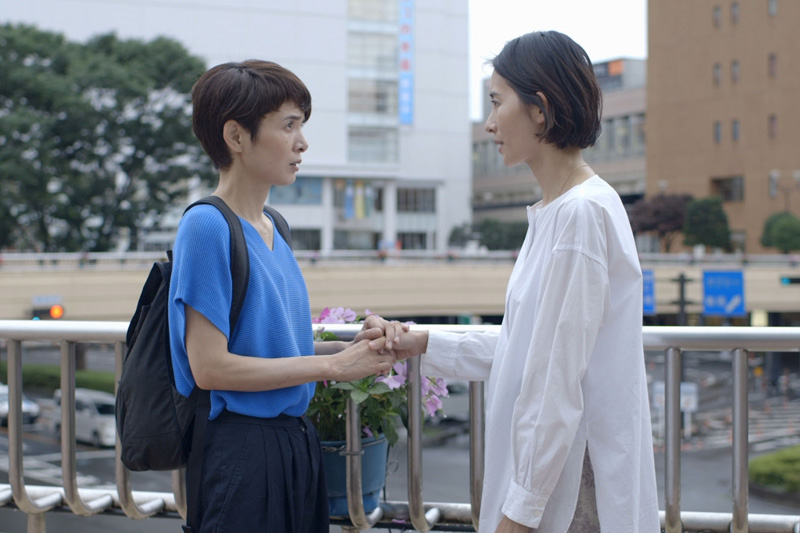
Wheel of Fortune and Fantasy 偶然と想像
Dir. Ryusuke Hamaguchi
2021 121 min.
As you’ve no doubt heard, Ryusuke Hamaguchi is the new director to watch from Japan. After receiving overseas acclaim in 2020 for the Wife of a Spy script, which he cowrote with his former teacher and the film’s director, Kiyoshi Kurosawa, his Wheel of Fortune and Fantasy played at the Berlin International Film Festival in early 2021 and received the Silver Bear Grand Jury Prize. Less than 2 months later, Hamaguchi was in Cannes with another new film, Drive My Car, which snagged the Best Screenplay award and is now in the frontrunner position on the Oscar shortlist for Best International Feature (or perhaps, Parasite-style, Best Film).
Wheel of Fortune and Fantasy comprises 3 short films about chance and yearning (the Japanese title means "coincidence and imagination"), each with female protagonists, but none directly related. A master of minimalism and minute detail, Hamaguchi’s finely crafted stories are always very talky, and the conversations always brutally frank.
In this work, he starts with two women in a taxi discussing a new love interest. Episode one is titled Magic (or something less assuring), and model Meiko (Kotone Furukawa) listens with a sinking heart as her friend Tsugumi (Hyunri) describes the best date of her life. When she decides she must do something about it, nothing about the ensuing confrontation is predictable.In episode two, Door Wide Open, a woman (Katsuki Mori) helps her college-student lover take revenge on his pompous professor (Kiyohiko Shibukawa) for failing him. The professor may have just won a prestigious literary price, but he is almost hilariously scrupulous about avoiding any hint of teacher-student interaction — which reduces the woman’s chances of seducing and humiliating him as planned.
In the final episode, Once Again, Natsuko (Fusako Urabe) is leaving her 20th high school reunion when she bumps into an old classmate, Aya (Aoba Kawai), who invites her home for tea. While it doesn’t seem to matter, this chapter takes place after a computer virus has wiped out the internet, thus underscoring the importance of the women’s shared memories, sans Facebook, about school and mutual friends… until they begin to realize something’s amiss.Working with his Happy Hour producer, Satoshi Takada, Hamaguchi makes each story a masterclass in how to sustain interest even in mundane settings, how to provoke laughter and empathy when most needed, and how to produce a jolt of surprise each time you least anticipate it. It’s a must see, even if — or especially if — you’ve already watched Drive My Car.
Storytellers
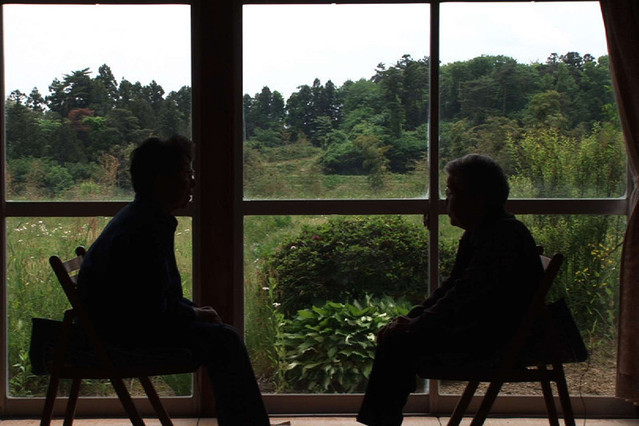
Storytellers うたうひと
Dir. Ryusuke Hamaguchi
2013 120 min.
The third installment in what’s known as the Tohoku Trilogy, co-directed by Hamaguchi and Ko Sakai, Storytellers takes a different approach to the 3/11 Tohoku earthquake and tsunami than The Sound of Waves (2012) and Voices from the Waves (2013). While the latter two focus on true stories, Storytellers shares the regions’ folk tales. Not surprisingly, their themes often resonate with the more recent tragedy.
Former classmates at Tokyo University of the Arts, Hamaguchi and Saki had gone to Tohoku shortly after the disaster as part of a project to document the stories of the survivors, and decided they didn’t want to just shoot the usual talking heads as part of director-led interviews. Instead, their three documentaries bring pairs of people together in conversation with each other — friends, family members, survivors — rather than with an interviewer.
Shooting them head on, facing the camera directly, allows these pairs to feel more comfortable and to chat at their own pace. While it creates the sense that we’re eavesdropping on them at first, it gradually pulls us in, since their sense of intimacy is palpable.
Cinema K2: Shimokita Ekimae Cinema
Please be sure to check with the theater before going.