
FOCUS ON ASIA INTERNATIONAL FILM FESTIVAL FUKUOKA 2016
A Modern and a Vintage Masterpiece
Venue(s): CANAL CITY HAKATASeptember 15 to September 25, 2016
Language: Japanese with English subtitles
Theater website: canalcity.co.jp.e.jx.hp.transer.com/#googtrans(ja|en)
Tariff: Single ticket: ¥1,300, 5 ticket pack: ¥5,500, Pass: ¥13,000
Advance tickets: Single ticket: ¥1,100, 5 ticket pack: ¥4,400, Pass: ¥11,000
Talk event: Talk event after each screening
Title: アジアフォーカス・福岡国際映画祭 2016 (Asian Focus Fukuoka Kokusai Eigasai 2016)
For those lucky enough to live in or near the thriving southern cultural capital of Fukuoka, Kyushu, there’s an impressive lineup of Japanese films showing at the Focus on Asia-Fukuoka International Film Festival — especially if you do not need English subs. The Asian films in the festival will have both Japanese and English subs, but alas, some of the festival’s biggest treats will be screened in Japanese only. They include a special section of films based on work by Kohei Tsuka, a famed playwright and director who hailed from Fukuoka. Kinji Fukasaku directed Tsuka’s Fall Guy in 1982 and Koji Wakamatsu directed Tsuka’s Netorare Sosuke in 1992 — both are not to be missed.
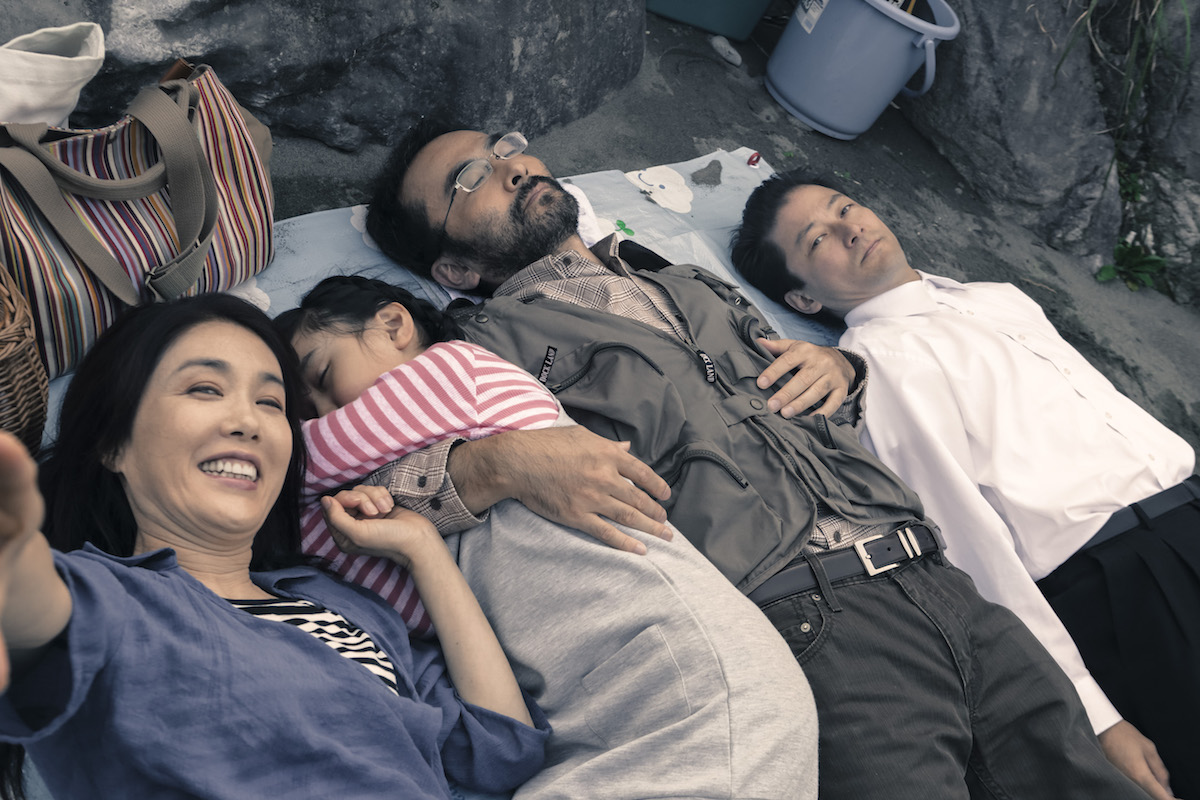
Only two of the festival’s Japanese titles will be subtitled, but they’re both must-sees. The first is this year’s Cannes Un Certain Regard Jury Award-winner, Harmonium, a thrillingly dark portrait of the collapse of a fractured family following the arrival of an old acquaintance (played by star Tadanobu Asano with chilling politesse), who moves in and begins working in their small factory. Although it’s thematically similar to Fukada’s 2010 hit Hospitalité, which marked his advent on the international scene, it is no amiable, blackly comic romp. An enigmatic, entirely engrossing work that probes undercurrents of surprising philosophical depth, Harmonium ends with an ambiguity that will incite discussion long after its final, devastating moments. Fukada was in competition at Cannes against festival favorite Hirokazu Kore-eda. The fact that he won and Kore-eda didn’t says a lot about this extraordinary film.
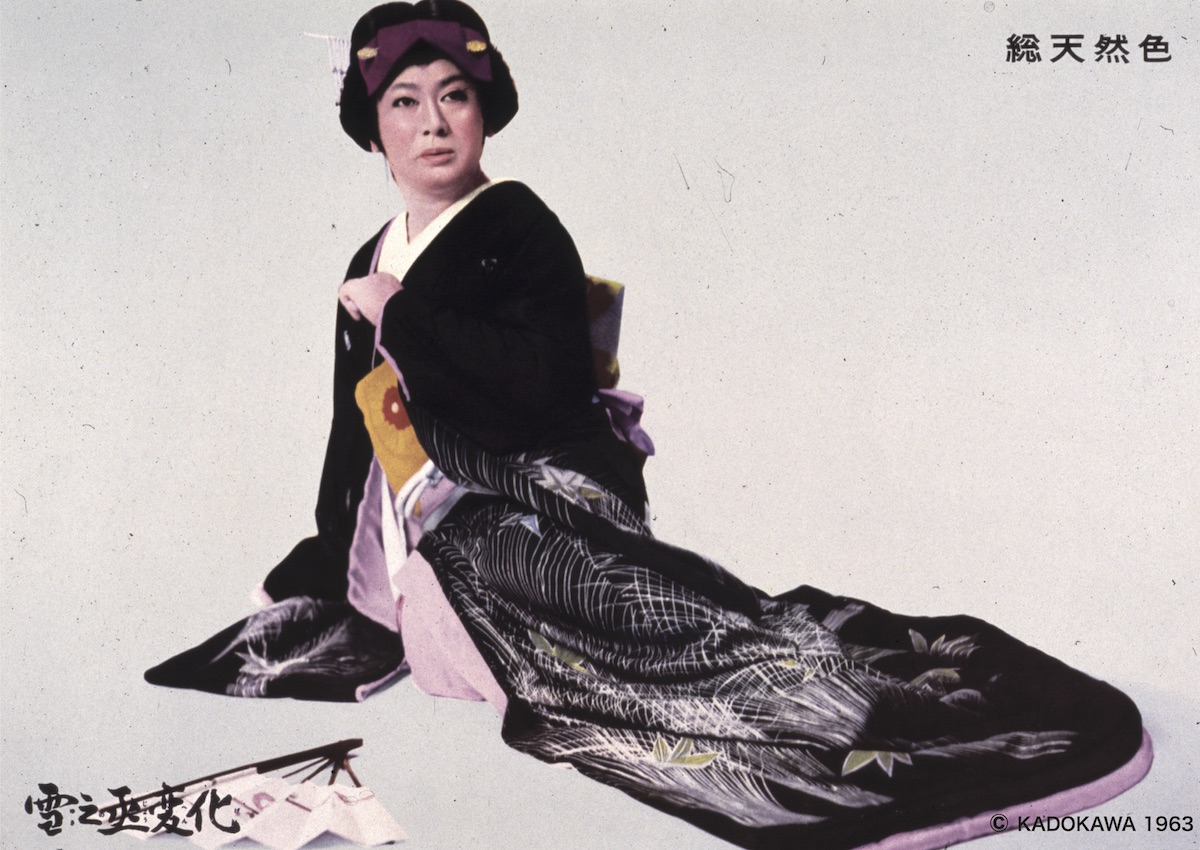
The other English-subbed must-see is Kon Ichikawa’s masterpiece An Actor’s Revenge (1963), digitally remastered and rediscovered outside Japan last year, on the 100th anniversary of the auteur’s birth. One of the most vividly colorful films ever made (in splendiferous Cinemascope), it tells the tale of Yukitaro, whose entire family is killed when he is a child, nursing thoughts of revenge that he finally acts upon in adulthood. By then, he is an onnagata actor (playing female roles) in a traveling kabuki troupe, and has just arrived in Edo when he discovers the three murderers in the audience. What follows is absolutely staggering, in a style, writes film historian Jasper Sharp, “which falls only just slightly shy of pure camp, burying such shortcomings as the hackneyed narrative arc beneath a thick pop art veneer, melding a host of new cinematic techniques with constant theatrical nudges to the viewer that break with the sacred fourth wall convention of screen drama, all laid down to a score that alternates between traditional Japanese music and sultry 60s jazz.”
CANAL CITY HAKATA
For those lucky enough to live in or near the thriving southern cultural capital of Fukuoka, Kyushu, there’s an impressive lineup of Japanese films showing at the Focus on Asia-Fukuoka International Film Festival — especially if you do not need English subs. The Asian films in the festival will have both Japanese and English subs, but alas, some of the festival’s biggest treats will be screened in Japanese only. They include a special section of films based on work by Kohei Tsuka, a famed playwright and director who hailed from Fukuoka. Kinji Fukasaku directed Tsuka’s Fall Guy in 1982 and Koji Wakamatsu directed Tsuka’s Netorare Sosuke in 1992 — both are not to be missed.
Only two of the festival’s Japanese titles will be subtitled, but they’re both must-sees. The first is this year’s Cannes Un Certain Regard Jury Award-winner, Harmonium, a thrillingly dark portrait of the collapse of a fractured family following the arrival of an old acquaintance (played by star Tadanobu Asano with chilling politesse), who moves in and begins working in their small factory. Although it’s thematically similar to Fukada’s 2010 hit Hospitalité, which marked his advent on the international scene, it is no amiable, blackly comic romp. An enigmatic, entirely engrossing work that probes undercurrents of surprising philosophical depth, Harmonium ends with an ambiguity that will incite discussion long after its final, devastating moments. Fukada was in competition at Cannes against festival favorite Hirokazu Kore-eda. The fact that he won and Kore-eda didn’t says a lot about this extraordinary film.
The other English-subbed must-see is Kon Ichikawa’s masterpiece An Actor’s Revenge (1963), digitally remastered and rediscovered outside Japan last year, on the 100th anniversary of the auteur’s birth. One of the most vividly colorful films ever made (in splendiferous Cinemascope), it tells the tale of Yukitaro, whose entire family is killed when he is a child, nursing thoughts of revenge that he finally acts upon in adulthood. By then, he is an onnagata actor (playing female roles) in a traveling kabuki troupe, and has just arrived in Edo when he discovers the three murderers in the audience. What follows is absolutely staggering, in a style, writes film historian Jasper Sharp, “which falls only just slightly shy of pure camp, burying such shortcomings as the hackneyed narrative arc beneath a thick pop art veneer, melding a host of new cinematic techniques with constant theatrical nudges to the viewer that break with the sacred fourth wall convention of screen drama, all laid down to a score that alternates between traditional Japanese music and sultry 60s jazz.”
CANAL CITY HAKATA
Please be sure to check with the theater before going.