
NFAJ: 90 Years of Toho: A History of Modern and Innovative Films (Part 1)
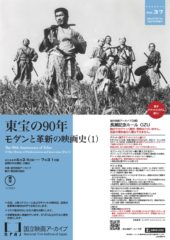
Celebrating 9 Decades of Diversity
Venue(s): National Film Archive of JapanJune 24 to July 31, 2022. English subbed films start on July 2. Look for with "with English subtitles" or English titles for E-subs or check below. https://www.nfaj.go.jp/exhibition/toho202205/#section1-2
Language: Japanese with English subtitles
Official website: www.nfaj.go.jp/exhibition/toho202205/
Theater website: www.nfaj.go.jp/english/visit/access/
Tariff: General: ¥520, Student/Senior: ¥310, Under 16: ¥100
Advance tickets: From June 14, 10 am. ¥520: https://www.nfaj.go.jp/exhibition/toho202205/#section1-3
Title: NFAJ 東宝の 90年: モダンと革新の映画史 (1) (NFAJ Toho no 90 Nen: Modern to Kakumei no Eigashi (1))
The National Film Archive of Japan (NFAJ) is marking the 90th anniversary of the nation’s largest film studio, Toho. Best known overseas as the home of Godzilla, Toho has also produced and distributed the films of Akira Kurosawa, Yasujiro Ozu, Kenji Mizoguchi, Masaki Kobayashi, Mikio Naruse and the anime films of Studio Ghibli, among many others. Among the films in the anniversary celebration are four with English subtitles.
Two of the films are by directed Tamizo Ishida, The Fallen Flowers (1938) and The Song of Old (1939). Ishida made close to 90 films and wrote 20 scripts for the studio between 1926 and 1947. Very few of his early silents from the late 1920s and early 1930s survive, but he seems to have directed mainly chambara swashbucklers until the mid-1930s, when his adaptations of literary works gained favor, as did his collaborations with the Shingeki Bungakuza theater troupe, which specialized in performances of Western plays.
Flowers Have Fallen (aka Fallen Blossoms)
July 2, 2022 (Sat) 14:40
July 22, 2022 (Fri) 18:30
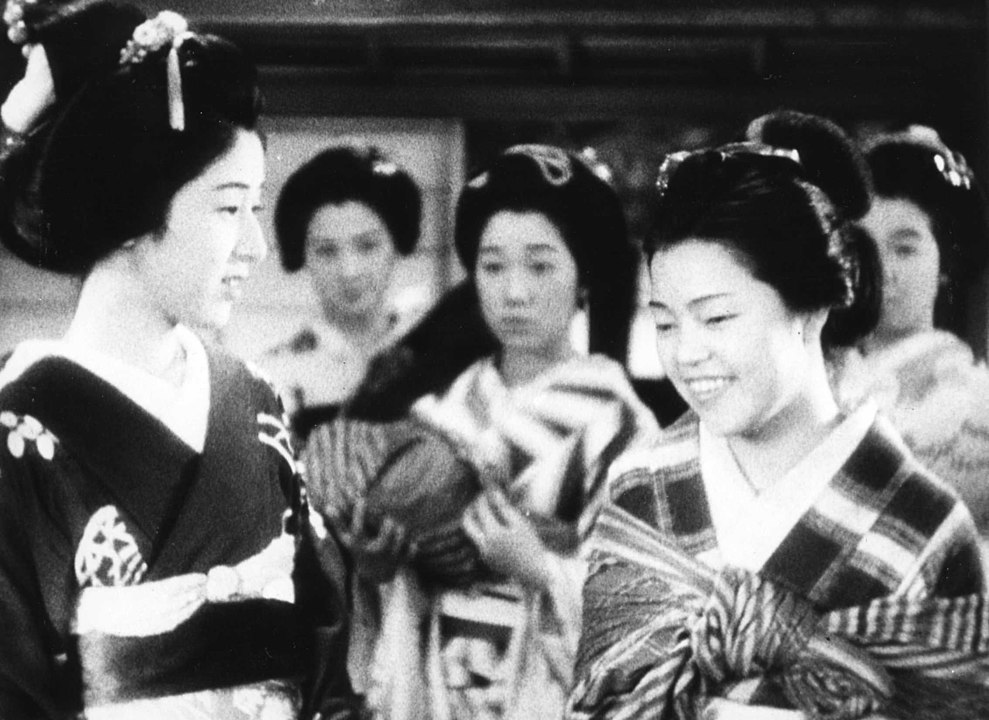
Flowers Have Fallen, 花ちりぬ dir. Tamizo Ishida
1938, 74min, 35mm, BW, with English subs
This masterwork, which film historian Noel Burch called “one of the most remarkable community portraits ever filmed,” follows the inhabitants of a Kyoto geisha house as the war that would end with the Meiji Restoration rages just outside their walls. Based on a play by Kaoru Morimoto, all of its characters are female (actresses from the Bungakuza troupe), and all the action takes place entirely within the house.
The Song of Old
July 3, 2022 (Sun) 13:30
July 22, 2022 (Fri) 16:00
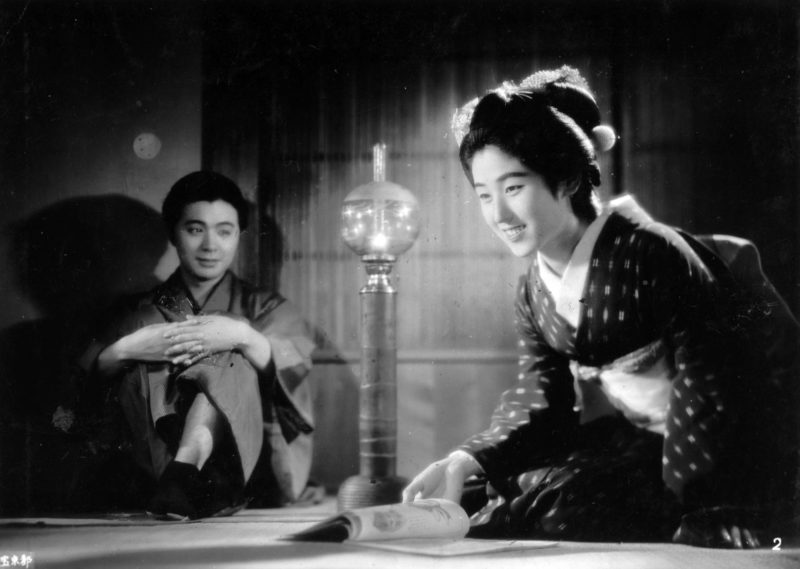
The Song of Old, むかしの歌 dir. Tamizo Ishida
1939, 77min, 35mm, BW, with English subtitles
Directed by Tamizo Ishida the year after Flowers Have Fallen (above), with Kon Ichikawa serving as assistant director and title sequence designer, The Song of Old focuses on the two daughters of two families at the beginning of the Meiji period (1868-1912). O-Mio (Ranko Hanai) grows up as the only daughter of a good family and works as a shipping agent in Osaka, while O-Shino is from a poor samurai family. The two become like sisters, but then O-Shino is sent away to become a geisha when her parents can no longer afford her.
Ishida creates a realistic portrait, poetically photographed, of the lot of women during a turbulent era, when their mindsets were beginning to change and options seemed within their grasp, and Hanai gives a standout performance.
The End of Summer
July 13, 2022 (Wed) 13:10
July 19, 2022 (Tue) 18:15
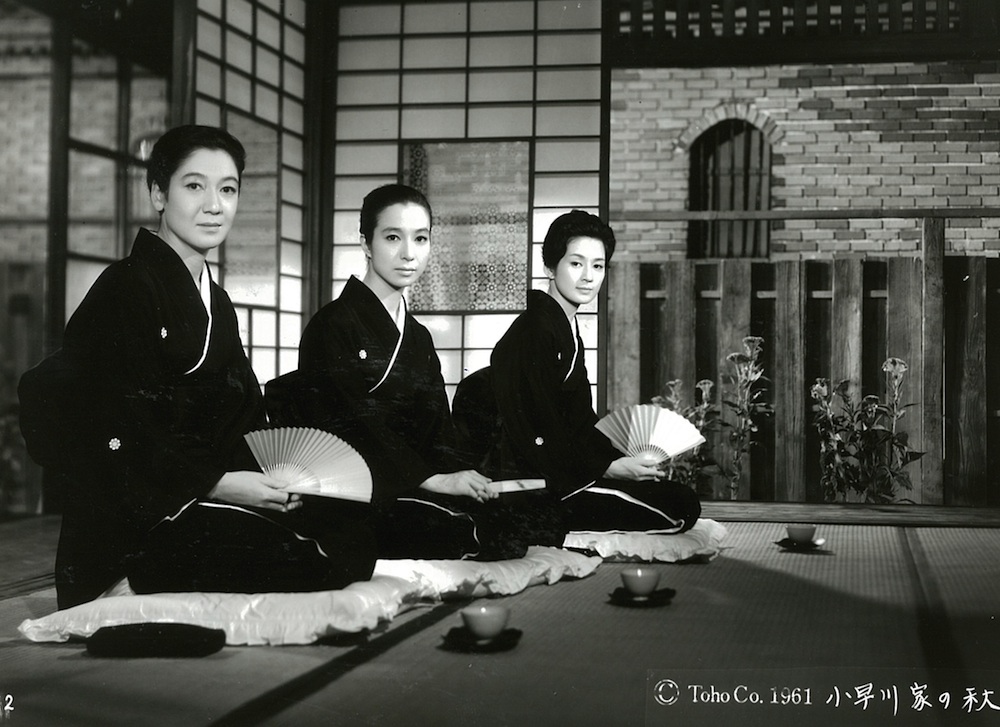
The End of Summer, 小早川家の秋 dir. Yasujiro Ozu
1961, 103min, 35mm, Color, with English subtitles
Yasujiro Ozu, predominantly a Shochiku studios director, was invited to join Toho's leading actors and crew for this film commemorating the 10th anniversary of the founding of Takarazuka Pictures. In The End of Summer (1961), Ozu’s second-to-last film, actor Ganjiro Nakamura plays the devil-may-care patriarch of the Kohayagawa family, which runs a sake brewery in Kyoto. He has two daughters, including luminous Ozu regular Setsuko Hara, and a widowed daughter-in-law who seems to need his help. As ever with the master director, the tragicomic intergenerational story involves unwanted matchmaking, an old flame, illness, a business loss and finally, a family gathered in reminiscence.
The Daughter of the Samurai
July 26, 2022 (Tue) 14:40. (After 2 Japanese films and short break)
July 30, 2022 (Sat) 17:15. (After 2 Japanese films and short break)
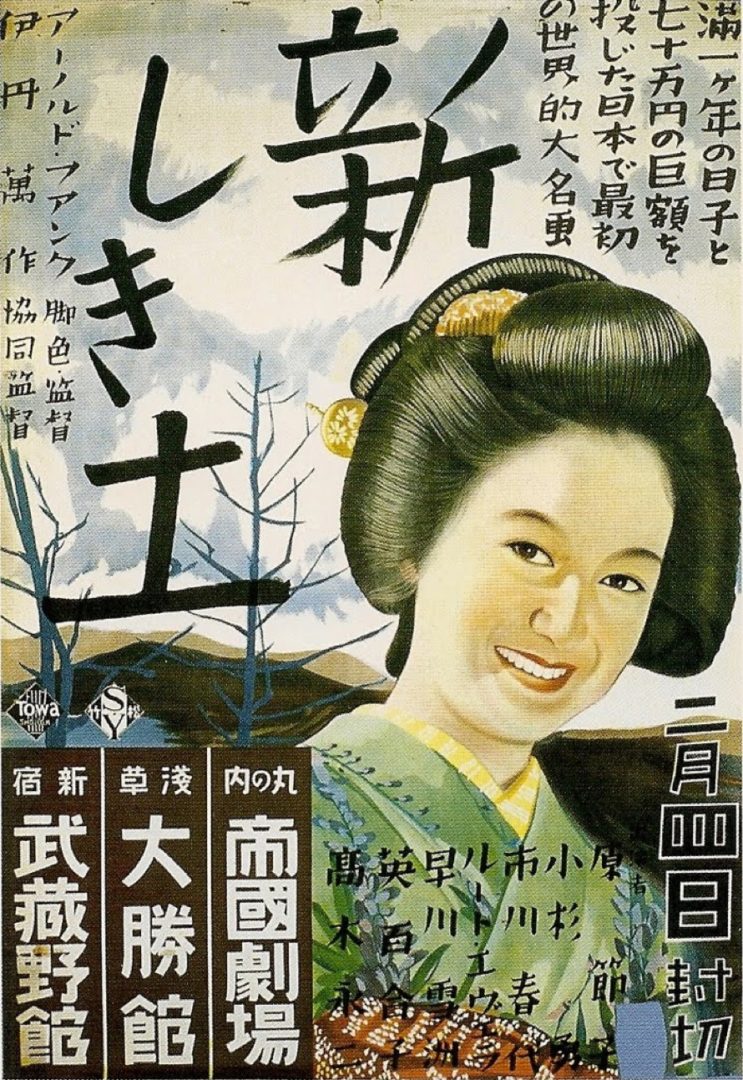
The Daughter of the Samurai, 新しき土[日英版] dir. Arnold Fanck
1937, 86min, 35mm, BW, No Japanese subs
Teruo (Kosugi) returns home from his studies in Europe and, rebelling against Japanese customs, announces the dissolution of their engagement, while his permitted wife Mitsuko (Hara) is heartbroken. A Japanese-English version directed by Mansaku Itami was shot at the same time as the German version directed by Funk, using the same continuity of actors and crew. The Japanese-English version is structured to weaken the oppositional structure of "the West" versus "Japan.
This rather infamous 1937 Germany-Japan co-production was designed to promote goodwill between the two countries, based on their “political and military proximity,” and was the first of two co-productions between Imperial Japan and Nazi Germany.
Directed in German by Arnold Fanck, known for pioneering the mountain-film genre, it had major international stars. A Japanese-English version directed by Mansaku Itami was shot at the same time, with the same actors and crew. But Itami’s version apparently downplayed the division of “the West” and Japan, and the two directors clashed so much on set, they essentially wound up creating two different films for release in their respective countries.
In the Japanese version, a man Teruo (Kosugi) returns home from his studies in Europe and, rebelling against Japanese customs, announces the dissolution of their engagement, while his permitted wife Mitsuko (Hara) is heartbroken.
In Fanck’s version, Teruo returns to Japan after spending 6 years at an agricultural college in Germany. As the adopted son of an old samurai family, he is expected to marry the eldest daughter, Mitsuko (Ozu muse Setsuko Hara), but naturally, he’s been infected by Western individualism. He shocks his future father-in-law (Hollywood star Sessue Hayakawa) by announcing that he intends to marry a German journalist, Gerda (Ruth Eweler), whom he met on the ship back to Japan. But Gerda will have none of it, and tries to convince Teruo to honor traditions. Eventually, Mitsuko and Teruo are reunited and move to Japan’s puppet state Manchukuo, where they begin to work on a farm.
On the film’s release in Germany, it was widely reported that Joseph Goebbels praised the film in his diary as “good for understanding Japanese life and thinking,” while also noting that it was “unbearably long.”
National Film Archive of Japan
Please be sure to check with the theater before going.