
NFAJ: HEINOSUKE GOSHO RETROSPECTIVE
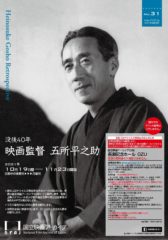
Celebrating a Master of Laughter and Tears
Venue(s): National Film Archive of Japan, theatre OzuOct. 19, 20, 29, Nov. 6, 7, 11, 14, 2021
Language: 5 films are with English subtitles
Official website: www.nfaj.go.jp/exhibition/gosho202109/
Theater website: www.nfaj.go.jp/english/visit/access/
Tariff: General: ¥520, Student/Senior: ¥310
Advance tickets: ¥520+¥110 for service fee, buy advanced ticket at Pia site [P code: 551-546]
Title: 没後40年 映画監督 五所平之助 (Botsugo 40 Nen Eiga Kantoku Gosho Heinosuke)
Director: Heinosuke Gosho (五所平之助)
The National Film Archive of Japan (NFAJ) marks the 40th anniversary of Heinosuke Gosho’s death with a retrospective you won’t want to miss, highlighting 36 extant films out of the 100 he created, from his earliest surviving film, The Neighbor's Wife and Mine, to his final, Our Town, Mishima: 1977 Testimony, including five titles with English subs, all of them starring the legendary Kinuyo Tanaka. It’s the first time NFAJ has focused on the noted director since 1974. As always, we encourage you to explore the full lineup, which provides ample proof that Gosho should be better known internationally.
As the great film scholar Donald Richie wrote, “Any director who can create films such as Where Chimneys Are Seen (Entotsu no Mieru Basho) (1953), An Inn at Osaka (Osaka no Yado) (1954) and Growing Up (Takekurabe) (1955) deserves to be not only remembered but elevated to his rightful position among the very best.”
Gosho (1902–1981) had begun his career in 1923, joining Shochiku Kamata Studio as an assistant director the same year as Hiroshi Shimizu and Yasujiro Ozu. He made his directorial debut with Spring in the South Island (1925), and quickly gained notice for his character-focused modern dramas. In 1931, he made Japan's full-fledged talkie, The Neighbor's Wife and Mine, and a decade later, left Shochiku and moved to Daiei in 1942. He would also direct two films for Toho after the war, but his contract there was canceled when he took part in the 1950 labor union strikes.
After forming Studio Eight Productions and partnering with Shin Toho in 1951, Gosho continued directing theatrical releases before turning to documentaries for Kabuki-za Productions and Shochiku, including a film commemorating the 100th anniversary of the Meiji era (1868-1912), and Our Town, Mishima: 1977 Testimony, which commemorated the city in Shizuoka where he had lived since 1953.
His films are mostly associated with the shomingeki genre focusing on common people, but he was most famous for his humanistic treatment of the emotional turmoil experienced by his characters, and his ability to blend laughter and tears, which has been favorably compared with Lubitsch and Chaplin.
The Neighbor's Wife and Mine [マダムと女房]
Oct. 19, 2021 (Tue) 18:30
Nov. 11, 2021 (Thu) 15:00

The Neighbor's Wife and Mine [マダムと女房]
56 min, Black and white
Japan's first feature film to fully employ sound and the winner of the Kinema Junpo Best Film Award, The Neighbor's Wife and Mine is the oldest Gosho work known to exist, although it was already his 39th film. Anxious to do something new, the director had decided to take on the challenge of making Japan's first full-scale talkie. It manages to avoid the constraints of simultaneous recording (hilariously immortalized in Singin’ in the Rain) by deploying moving shots and using multiple cameramen. In this comedy, a playwright who works from home, Shibano (Atsushi Watanabe), is constantly distracted by his wife (Kinuyo Tanaka) and daughter, as well as the noisy musical neighbors. When he goes to complain, the woman of the house (Satoko Date) invites him to stay and listen to the jazz band rehearsal, and the experience is revelatory.
The Bride Talks in Her Sleep [花嫁の寝言] (1933)
Somniloquy of the Bridegroom [花婿の寝言] (1935)
Oct. 19, 2021 (Tue) 15:00
Nov. 06, 2021 (Sat) 17:40
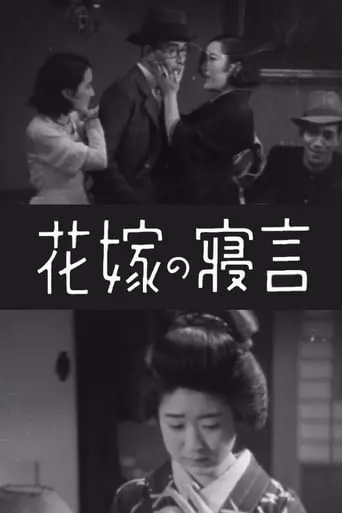
The Bride Talks in Her Sleep [花嫁の寝言] (1933)
57 min, Black and white
Inspired by Kinuyo Tanaka’s memorable turn as the playwright’s put-upon wife in The Neighbor's Wife and Mine, this wisp of a comedy once again highlights Gosho’s imaginative use of the new sound technology and his formal experimentation. Here, Tanaka plays the lovely young bride, who finds herself telling bedtime tales to her new husband (Tokuji Kobayashi)’s friends.
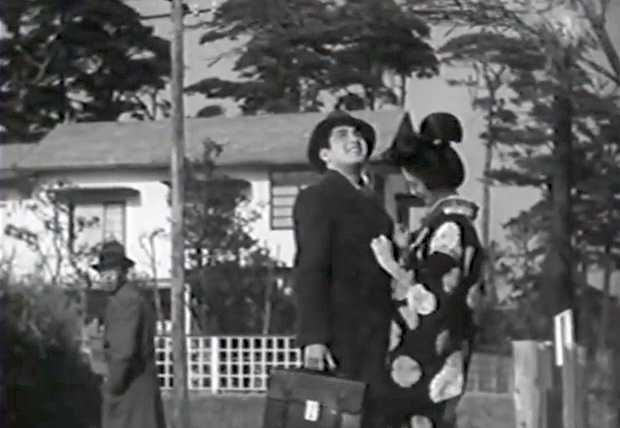
Somniloquy of the Bridegroom [花婿の寝言] (1935)
73 min, Black and white
In the follow-up, Somniloquy of the Bridegroom aka The Bridegroom Talks in His Sleep, also concerned with the petit bourgeoisie in a newly developed residential area, Hiroko Kawasaki charms as the fresh bride, with Chojiro Hayashi as the salaryman husband.
The Dancing Girl of Izu [伊豆の踊子] (1933)
Oct. 20, 2021 (Wed) 15:00
Nov. 07, 2021 (Sun) 16:00
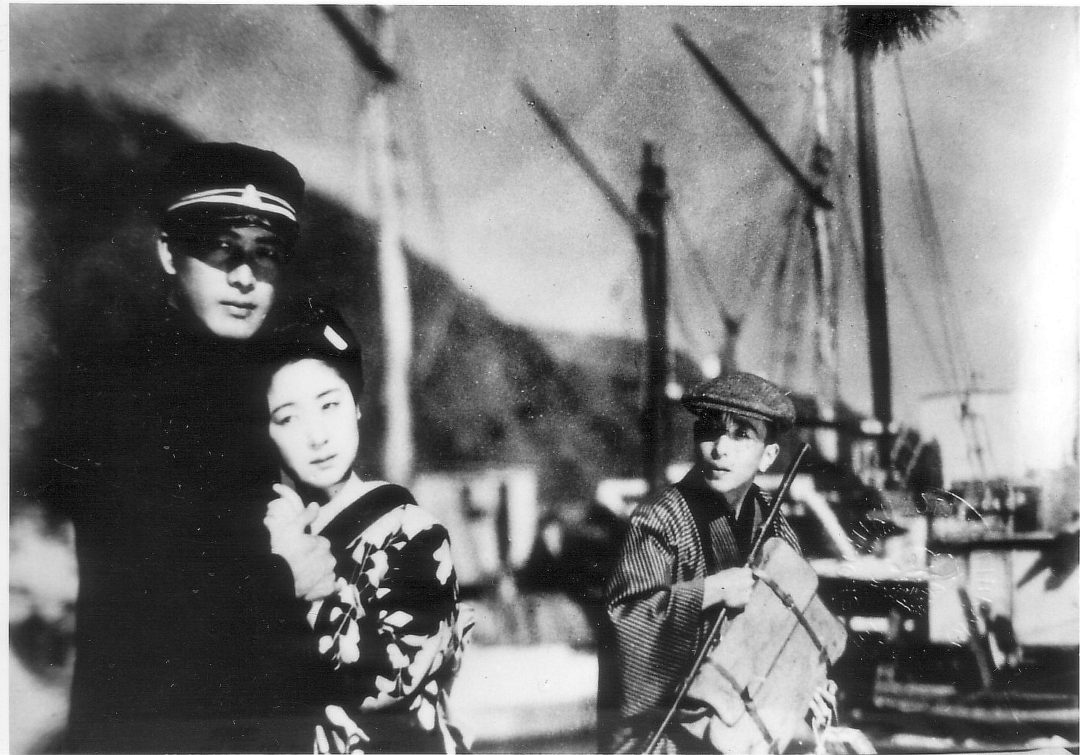
The Dancing Girl of Izu [伊豆の踊子] (1933)
124 min, Black and white
The oldest surviving of Gosho's many silent films and the first film adaptation of Yasunari Kawabata’s famous short story, The Dancing Girl of Izu depicts the doomed romance that develops between an Izu dancer (Kinuyo Tanaka) and a student (Den Ohinata) from Tokyo. Scholars have noted that the director and his cowriter obscured the original’s class differences between the characters, and added a subplot to create a more nostalgic image of idealized, unwesternized Japan.
Only On Mondays
Yellow Crow [黄色いからす] (1957)
Oct. 29, 2021 (Fri) 15:00
Nov. 14, 2021 (Sun) 13:00.
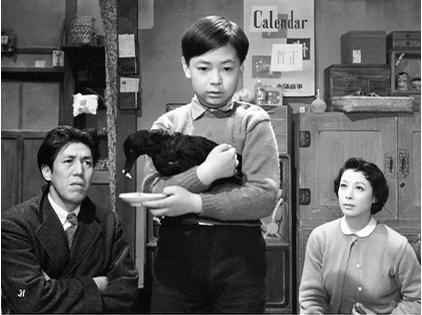
Yellow Crow [黄色いからす] (1957)
103 min, Color
The only postwar Gosho film and the only non-comedy being shown with English subs, Yellow Crow concerns a young boy whose teacher (Kinuyo Tanaka) notices that he only draws pictures in black and yellow, a psychological clue that usually means a child has no parents or is profoundly unhappy. The truth is more complicated, but the boy’s relationship with his understanding teacher gradually helps ameliorate an unhealthy situation at home.
National Film Archive of Japan
Please be sure to check with the theater before going.