
NFAJ: KAJIRO YAMAMOTO RETROSPECTIVE
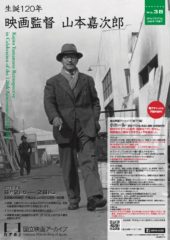
Prolific Early Director Gets His Due
Venue(s): National Film Archive of JapanAugust 2, 3 ,10, 13, 2022
Language: 5 screening are with English subtitles
Official website: www.nfaj.go.jp/english/exhibition/yamamoto202207/
Theater website: www.nfaj.go.jp/english/visit/access/
Tariff: General: ¥520, Student/Senior: ¥310, Under 16: ¥100
Advance tickets: https://www.e-tix.jp/nfaj/en/
Title: 生誕120年 映画監督 山本嘉次郎 (Seitan 120 nen Eiga Kantoku Yamamoto Kajiro)
Director: Kajiro Yamamoto (山本嘉次郎)
Director Kajiro Yamamoto (1902 – 1974) is probably best known as the mentor of Akira Kurosawa, who served as his assistant director on 17 films, as well as for helping launch the “new face” Toshiro Mifune. Over a lengthy career that encompassed stage, film, TV and radio productions, Yamamoto directed over 90 documentaries, silent and sound films. He’s getting a much-deserved retrospective on the occasion of his 120th anniversary at the National Film Archive Japan, and there are several English-subtitled works being screened.
After first working as an actor on the stage (a choice that resulted in his family disowning him), Yamamoto joined Nikkatsu as an assistant director, made his directorial debut in 1924 at Toa Kinema and moved to Photo Chemical Laboratories (P. C. L.) in 1934, where he first made a name filming the comedies of Kenichi Enomoto. When P. C. L. became Toho, Yamamoto began helming realist dramas like Horse (1941), starring Hideko Takamine and AD’ed by Kurosawa, as well as war films like his most famous, The War at Sea from Hawaii to Malaya (1942) and Colonel Tateo Kato's Flying Squadron (1944), both featuring special effects by Eiji Tsuburaya, creative SFX wizard behind Godzilla and Ultraman.
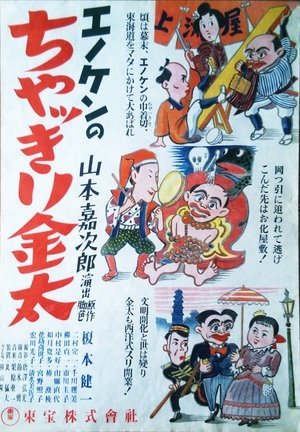
The director’s many Kenichi Enomoto comedies include his sixth collaboration, Enoken’s Kinta the Pickpocket (1937), which is being shown with English subs at NFAJ. An adaptation of J. McCulley's detective novel Subway Sam, Yamamoto set the musical comedy in the waning days of the Tokugawa Shogunate. Enomoto plays Kinta, a pickpocket who steals a secret book from a Satsuma clan official. Low-ranking Deputy Kurakichi (Zeko Nakamura), gives chase down the Tokaido Highway, and hilarity ensues as the two engage in a cat-and-mouse game and encounter a variety of peculiar characters. The film was a huge hit, but only the extensively cut and re-edited compilation version survives.
Enoken’s Kinta the Pickpocket
August 3, 2022 (Wed) 18:40
August 13, 2022 (Sat) 12:20

Enoken’s Kinta the Pickpocket, エノケンのちゃっきり金太
1937, 72min, 35mm, B&W, with English subtitles
[This is a re-edited version of #1-4.]
The director’s many Kenichi Enomoto comedies include his sixth collaboration, Enoken’s Kinta the Pickpocket (1937), which is being shown with English subs at NFAJ. An adaptation of J. McCulley's detective novel Subway Sam, Yamamoto set the musical comedy in the waning days of the Tokugawa Shogunate. Enomoto plays Kinta, a pickpocket who steals a secret book from a Satsuma clan official. Low-ranking Deputy Kurakichi (Zeko Nakamura), gives chase down the Tokaido Highway, and hilarity ensues as the two engage in a cat-and-mouse game and encounter a variety of peculiar characters. The film was a huge hit, but only the extensively cut and re-edited compilation version survives.
Uma or Horse
August 2 (Tue), 2022: 15:00
August 10 (Wed), 2022: 17:50
August 13 (Sat), 2022: 14:50
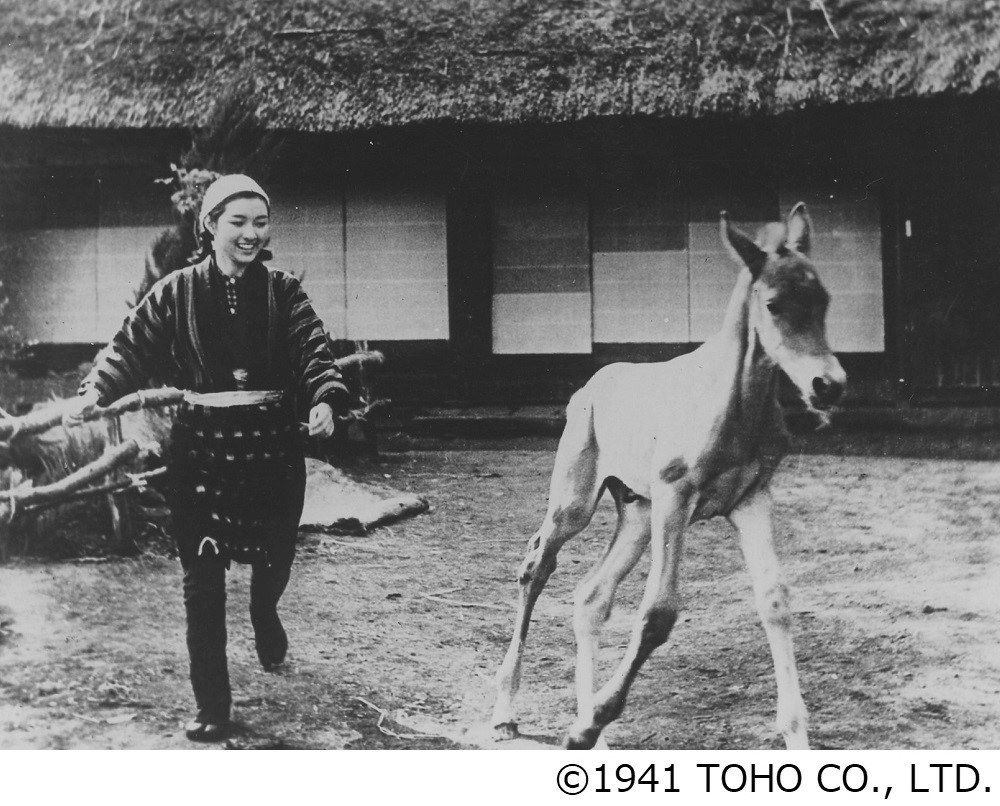 Uma or Horse, 馬
1941, 127 min, 35mm, B&W, with English subtitles
Told in a semi-documentary style, Yamamoto’s 1941 Horse follows the story of a young girl (17-year-old Hideko Takamine) who longs for a horse, and is rewarded when her poor farming family agrees to take care of a pregnant mare one winter at the foot of Mount Iwate. Unfortunately, neither the family nor the horse have much to eat, so the girl walks many miles through the snow to an area where grass grows year-round and saves the horse's life. In the spring, a colt is born, but a happy ending remains elusive.
Takamine was widely hailed for her sensitive portrayal of the girl’s coming of age, helping make her a star; and the film was also a catalyst for Akira Kurosawa’s rising fame. He had overseen the arduous, year-long Tohoku location shooting as the production coordinator, and it allowed him to go on to make his own directorial debut. Kurosawa wrote in his autobiography that he had served as first assistant and second unit director, as well as coscripting and editing the film.

National Film Archive of Japan
Please be sure to check with the theater before going.