
NFAJ: TOMOTAKA TASAKA RETROSPECTIVE
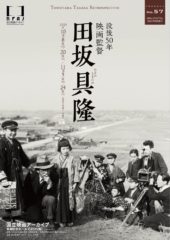
Highlighting a Forgotten Humanist Master
Venue(s): National Film Archive of JapanSeptember 9 (Mon) - October 23 (Wed), 2024; November 13 (Wed) - November 24 (Mon), 2024
Language: 4 films are with English subtitles
Official website: bit.ly/47iTiMY
Theater website: bit.ly/47bf98R
Theater website: www.nfaj.go.jp/english/
Theater website: www.nfaj.go.jp/english/visit/access/
Tariff: General: ¥520, Student/Senior: ¥310, Under 16: ¥100
Advance tickets: Go to the schedule 3 days in advance of the screening for specific titles: https://bit.ly/47bf98R
Title: 没後50年 映画監督 田坂具隆 (Botsugo 50 Nen Eiga Kantoku Tasaka Tomotaka)
Director: Tomotaka Tasaka (田坂具隆)
The National Film Archive of Japan (NFAJ) marks half a century since director Tomotaka Tasaka’s death by presenting the first-ever retrospective of his work, in conjunction with the publication of a book about his life. Despite making a name for himself at Nikkatsu before the war, the helmer has been largely overlooked. NFAJ notes: “His style, which consistently took notice of the small and the weak, bursts with encouragement for those trying to live lives of goodness and sincerity. It should shine particularly bright in this age of continuous calamity and increasing social intolerance.” Three of the films by Tasaka will play with English subtitles, along with another by his colleague, genre master Tomu Uchida.
Tomotaka Tasaka (1902-1974) began his career at Nikkatsu's Kyoto studio in 1924. In the 1930s, he and Tomu Uchida were the twin forces behind the fame of Nikkatsu Tamagawa Studio’s heyday, and Tasaka became known as a maker of realist, humanist films like A Pebble by the Wayside (1938) and Mud and Soldiers (1939), both featuring Isamu Kosugi. His war film Five Scouts (1938) earned an award at the 6th Venice International Film Festival, contributing to Japanese cinema’s early international acclaim.
Tasaka was born in Hiroshima and was there serving in the army in 1945 when the bomb was dropped, severely affecting his health. After recovering, he released The Song of Nagasaki (1952), reflecting his experiences as a survivor.
He went on to work at several studios, including Toei from 1962, nurturing stars like Yujiro Ishihara, Kinnosuke Nakamura, Yoshiko Sakuma, Ryoko Sakuma and Keiko Kishi. He also created several masterworks, including The Maid’s Kid (1955, featuring an excellent turn by Sachiko Hidari), Street in the Sun (1958), A Carpenter and Children (1962) and A House of Shame (1963).
THE BABY CARRIAGE, 乳母車
October 9 (Wed), 2024 15:00
October 12 (Sat), 2024 19:10

THE BABY CARRIAGE, 乳母車
1956, 109 min., 35mm, B&W, English subtitles
Yumiko Kuwabara (Izumi Ashikawa) is a college student with what she believes is a closeknit, and harmonious family, when she suddenly discovers a shocking truth: her father has a young mistress, Tomoko Aizawa (Michiyo Niinju), and a child with her. Distraught and extremely curious, Yumiko decides to visit Tomoko’s home. But there, she finds instead the mistress’ younger brother, Muneo (Yujiro Ishihara, shining in a role quite different from the Taiyozoku/Sun Tribe roles that made him famous), who is staying in her place while she’s away. Yumiko spends time with Muneo, and gradually realizes that her father and Tomoko are truly in love, forcing her to question everything she once believed about her family, and families in general.
RUN, GENTA, RUN!, はだかっ子
October 18 (Fri), 2024 18:40
November 24 (Sun), 2024 12:00
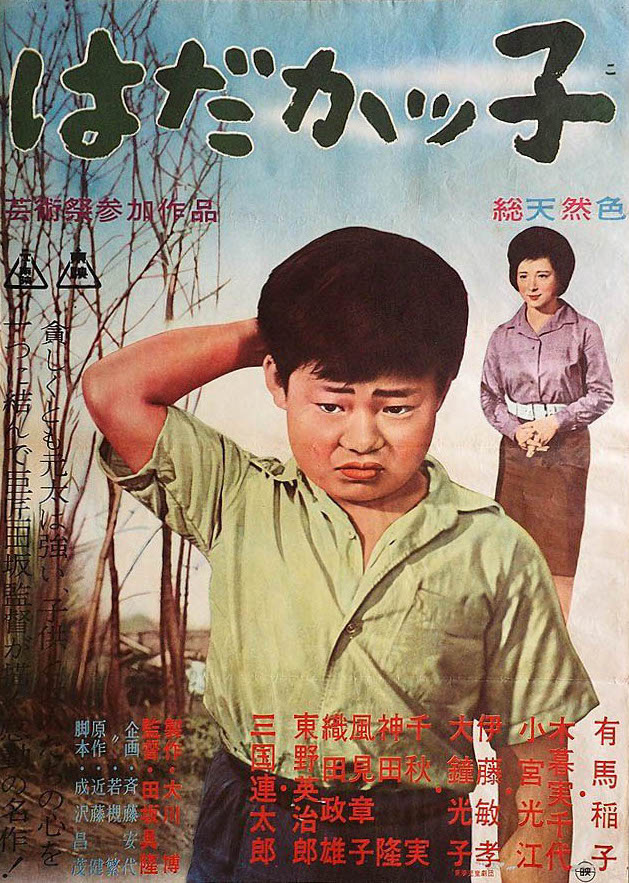 RUN, GENTA, RUN!, はだかっ子
1961, 146 min., 35mm, color, English subtitles
With the memories of war still fresh, Tasaka presents a young boy’s struggles with a light, humorous touch. Genta (Toshitaka Ito) is a lively sixth-grader with a keen sense of justice, who lives in the attic of a tenement house with his mother Oyoshi (Michiyo Kogure), a shamisen player. His father went to Indonesia as a soldier and never returned, leaving Genta and his mom to fend for themselves in post-war Japan. Despite their hardships, Genta remains cheerful and kind-hearted, even drawing an Indonesian house for his mother in a school sketch competition. However, he begins to have trouble at school at the same time that his mother’s illness worsens, and that’s a lot for a young boy to deal with.
A House of Shame, 五番町夕霧楼
November 19 (Tue), 2024 15:00
November 23 (Sat), 2024 15:40
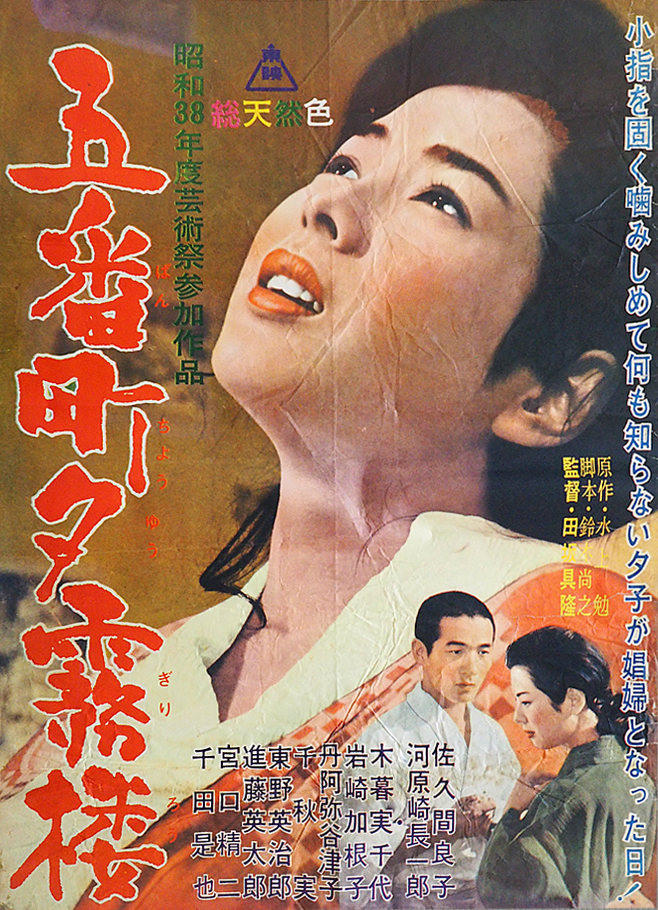
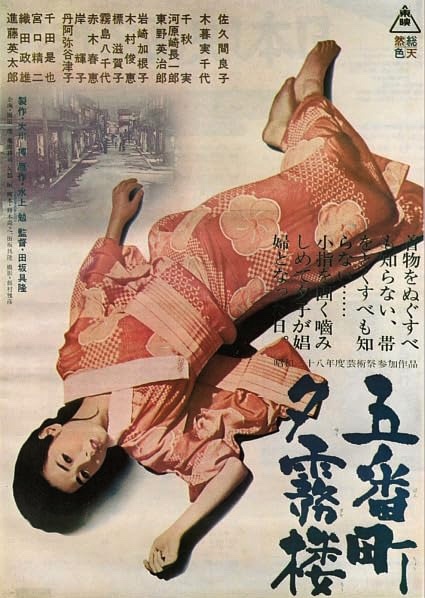
A House of Shame, 五番町夕霧楼
1963, 137 min., 35mm, color, English subtitles
Set in Kyoto in 1950 and based on Tsutomu Mizukami's novel of the same name, Tomotaka Tasaka’s A House of Shame tells a tragic love story that also explores themes of loss and the crushing weight of societal expectations in post-war Japan.
In the film, a beautiful young woman, Yuko (Yoshiko Sakuma), is sold by her father to a brothel to help support her poor family in a fishing village. She soon falls in love with a stammering novice monk at Kinkakuji, Kyoto’s beautiful golden temple. The two dream of escaping reality, returning to their hometown and getting married. But then the novice sets fire to the golden pavilion…
UNENDING ADVANCE, 限りなき前進 [New edition]
November 13 (Wed), 2024 15:00
November 16 (Sat), 2024 16:30
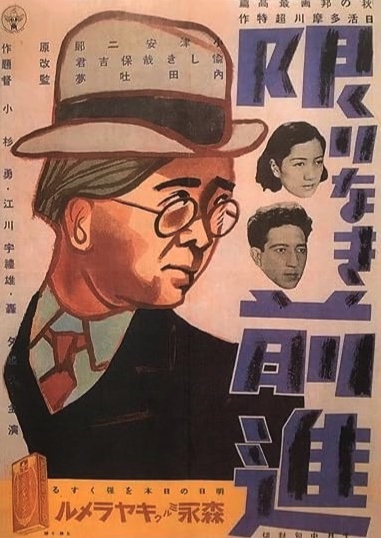
UNENDING ADVANCE, 限りなき前進 New edition
1937, 77 min., 35mm, B&W, English subtitles
NFAJ is also showing this film, by Tasaka’s Nikkatsu colleague and friend Tomu Uchida, in a special version that was trimmed by the studio for re-release after the war. Considered too dark by authorities, the film’s ending has been cut, with the original directorial intent supplemented instead by explanatory titles.
Unending Advance, based on a script by Yasujiro Ozu, tells the story of Tokumaru, a dedicated company man in his fifties, who dreams of a peaceful retirement in a home he’s been scrimping and saving to build. Living in the suburbs with his wife, adult daughter Fumiko, and young son, Tokumaru is determined to provide a better life for his family. Fumiko is engaged to Kato, an educated but unemployed man, while Tokumaru diligently works toward his goal of retiring at 65 and moving into his dream house.
However, Tokumaru’s world comes tumbling down when the company he has loyally served announces that mandatory retirement has been lowered from age 65 to 55. The sudden loss of income means his dream house will never be completed. As Tokumaru visits the construction site of his unfinished home, he is knocked unconscious by a falling beam. In a haze, he imagines a utopian future in which his family thrives. When he awakes, he cannot dispel the dream and reality intervenes, painfully.
National Film Archive of Japan
Please be sure to check with the theater before going.