
NFAJ: Women Who Made Japanese Cinema – Part 3
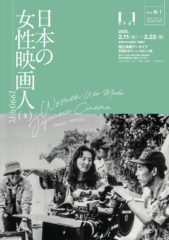
A Sampling of Female Contributions to 1990s Film
Venue(s): National Film Archive of JapanFebruary 11 (Tue) - March 23 (Sun), 2025
Language: 5 films are with English subtitles or English narration
Official website: www.nfaj.go.jp/film-program/women202502/
Theater website: www.nfaj.go.jp/english/
Theater website: www.nfaj.go.jp/english/visit/access/
Theater website: www.nfaj.go.jp/english/film-program/women-who-made-japanese-cinema-part-3-1990s/
Tariff: General: ¥520, Student/Senior: ¥310, Under 16: ¥100
Advance tickets: On the 3 days before the screening, find the Japanese film title on calendar. "https://www.nfaj.go.jp/calendar/?yearz=2025&month=2" and click through to the purchase page.
Title: 日本の女性映画人(3)—1990年代 (Nippon no Josei Eigajin (3) 1990 Nendai)
In the third part of its ongoing tribute to the women who helped propel Japanese cinema to the forefront, the National Film Archive of Japan (NFAJ) turns its focus on the 1990s. Whereas the 1970s and 1980s saw great changes in the film industry, with more women able to gain a foothold as screenwriters, directors and producers, the 1990s are considered to be the first period in which female directors were actually able to build sustainable careers. Among the 52 films, documentaries, experimental and animated works being shown, five have English subtitles/narration. As always, we encourage you to check out the entire lineup.
---
Director: Yukiko Takayama, 髙山由紀子
After the Wind Has Gone marked the directorial debut of screenwriter Yukiko Takayama, who had written screenplays for such Tetsutaro Murano films as Gassan and The Legend of Sayo. The daughter of Nihonga painter Takayama Tatsuo, she graduated with a Literature degree from Keio University, and studied screenplay writing after marriage. In 1975, she won a screenplay contest and made her debut as a screenwriter with Terror of Mechagodzilla (1975), the fifteenth film in the Godzilla franchise and the first written by a woman.
Takayama would go on to write for diverse genres and then began directing her own films. She excelled at depicting authentic female characters and was considered indispensable to a range of film and TV crime dramas, mysteries and historical narratives.
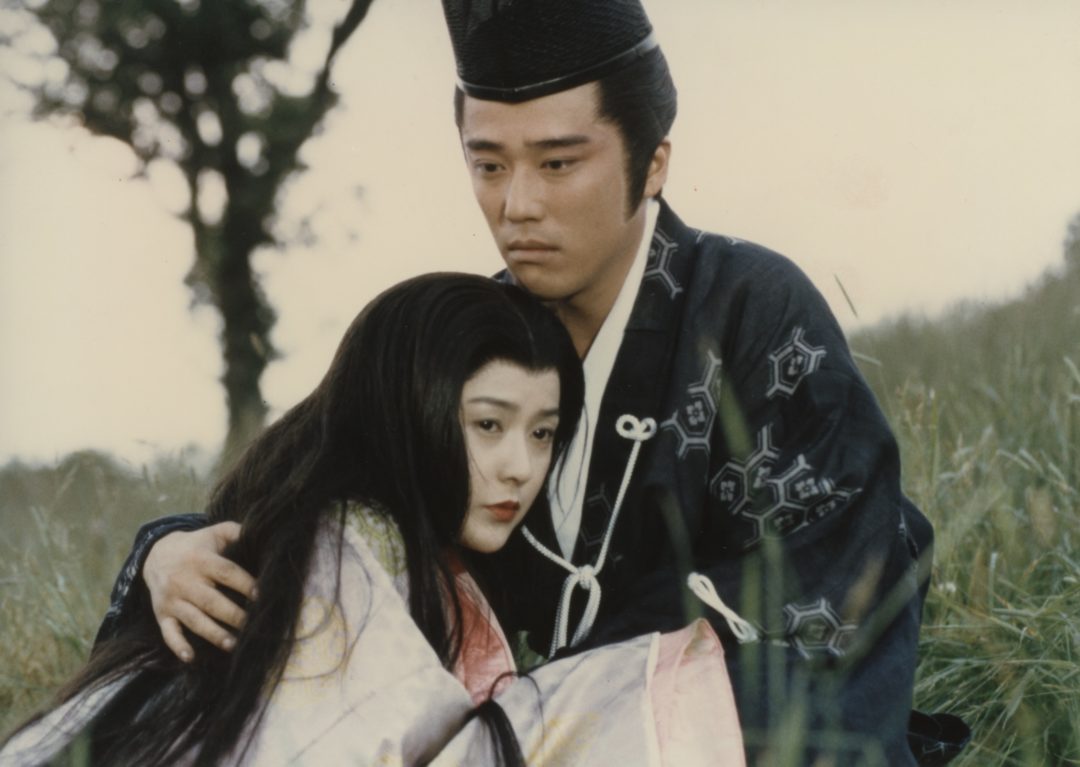
After Wind has Gone, 風のかたみ
February 13, 2025 (Thu), 19:00
February 16, 2025 (Sun), 16:00
Dir: Yukiko Takayama (髙山由紀子)
1996, 99 min., 35mm, color, English subtitles
This colorful film adaptation of Takehiko Fukunaga's historical novel “Kaze no Katami” (1968), which was inspired by “Konjaku Monogatari,” focuses on a young samurai’s passionate love for a princess, which leads him to a strange and fantastical fate after he meets a female Onmyoji (yin-yang master or geomancer, a position within Japan’s Ministry of the Center). Set in the capital of Kyoto during the Heian period (794-1185), the story also involves a flute player's daughter who adores the samurai, a brutal kidnapping and demons from hell.
---
Director: Sachi Hamano, 浜野佐知
This is the first mainstream film by Sachi Hamano, the renowned and prolific director/producer of pinku eiga told from the female perspective. At the 1997 Tokyo International Women's Film Festival, Hamano learned that legendary actress Kinuyo Tanaka had directed more feature films (six) than any other female director in Japanese history. Since Hamano had already directed more than 300 pink films under her own gender-blurred name as well as the pseudonym Chise Matoba, she was inspired to make her first non-pink film.
In 1998, to make Midori (a.k.a. In Search of a Lost Writer: Wandering the World of the Seventh Sense, based on the life and work of the female author Midori Osaki, she received over 12,000 donations from women throughout Japan and the cooperation of people in Ozaki’s Tottori hometown. The film was given the Amari Hayashi Prize at the 2000 Japanese Independent Film Festival.
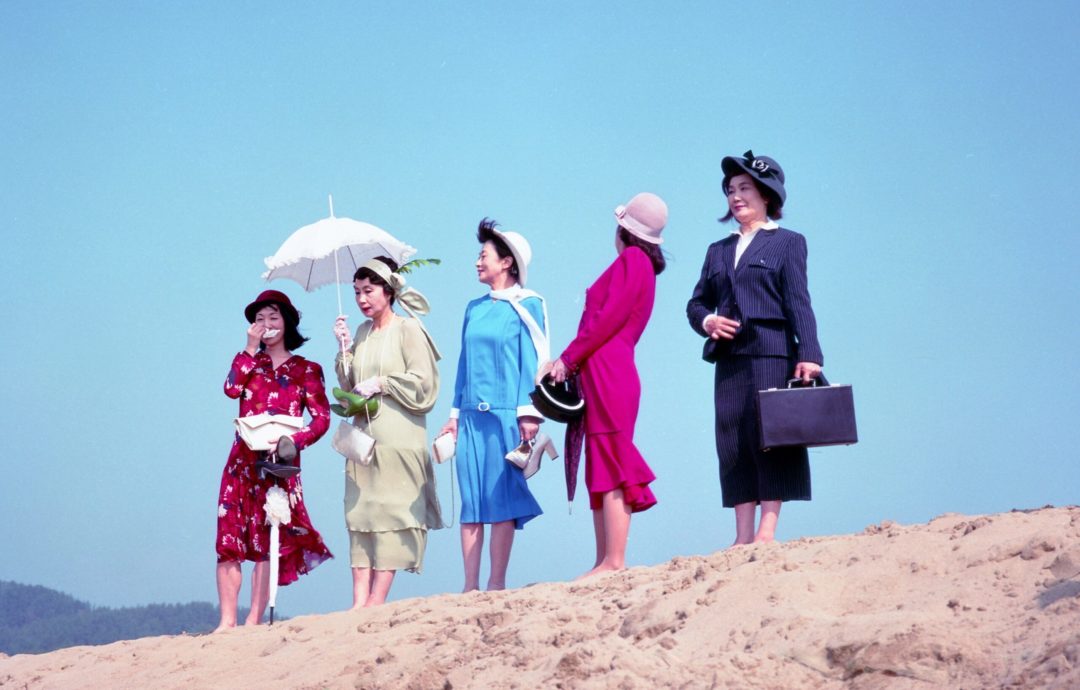
Midori (a.k.a. In Search of a Lost Writer)
第七官界彷徨 尾崎翠を探して
February 18, 2025 (Tue), 19:00
February 21, 2025 (Fri), 15:00
Dir. Sachi Hamano (浜野佐知)
1998, 108 min., 35mm, color, English subtitles
Midori is based on the life and work of female author Midori Ozaki, played by Kayoko Shiraishi. It depicts Ozaki’s life as well as dramatizing her best-known novel, "Wandering in the World of the Seventh Sense," in which a young woman named Machiko from a small town comes to Tokyo to live with her two brothers and falls in love with one of their fellow students. Machiko looks for the world of the "seventh sense," surpassing both the five senses of the human body and the "sixth sense." As Hamano put it, “Osaki develops a world far from such conventional modern ideas as that human beings are the center of the world, that the arts should make much of individual personality, or that love should be based on heterosexuality.”
---
Scriptwriter: Yuka Honcho, 本調有香
Yuka Honcho worked as script supervisor on the films of Tatsumi Kamishiro and Toshihachi Fujita before making her screenwriting debut with Immoral: Indecent Relations (1995, co-written with Kamishiro). She would go on to work on a range of titles, including the bittersweet Chieko Baisho-Tatsuya Fuji comedy Only the Cat Knows (2019).
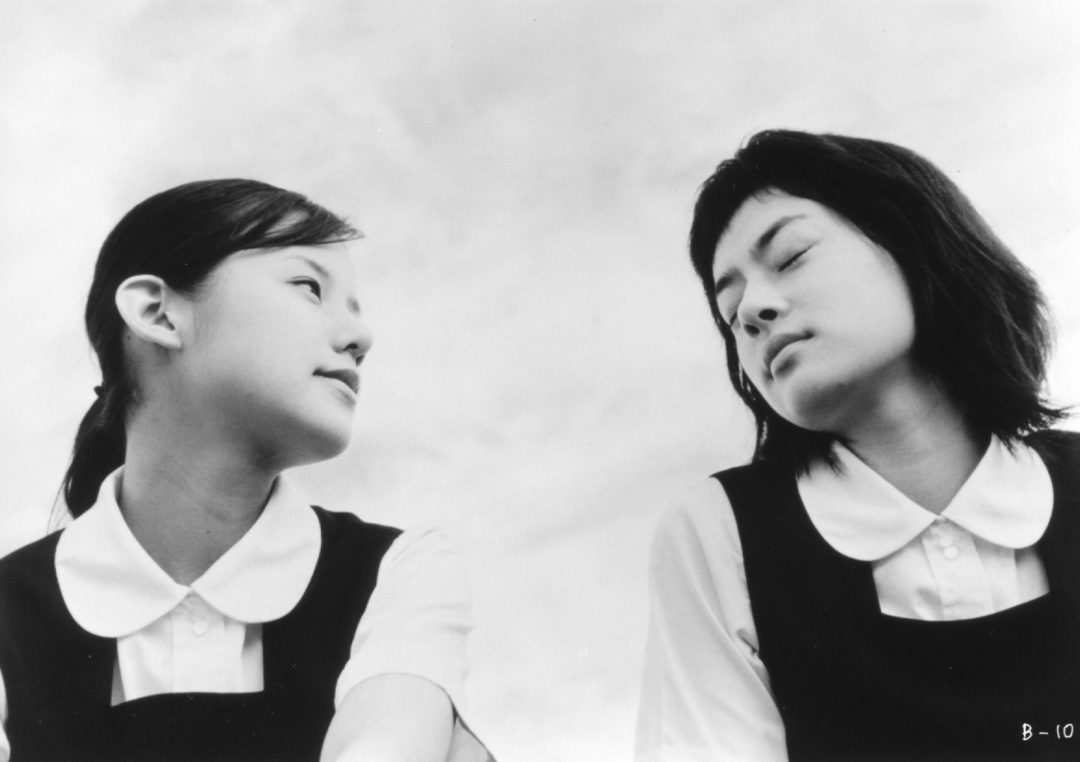
blue
February 28, 2025 (Fri), 15:00
March 2, 2025 (Sun), 13:00
Dir: Hiroshi Ando (安藤尋), Script. Yuka Honcho (本調有香)
2001, 116 min, 35mm, color, with English subtitles
Based on Kiriko Nananan's manga debut, Blue depicts the longing, jealousy and romantic feelings that quietly grow between two high school in a small seaside town. Kayako (Mikako Ichikawa), an introverted high school senior, is interested in Masami (Manami Konishi), a girl in her class. Eventually, they become more than friends. However, during the summer vacation, Masami goes to visit an older man she used to date, without telling Kayako… The film premiered at the Toronto International Film Festival in 2002.
---
Producer: Hiroko Matsuda, 松田広子
Hiroko Matsuda worked as a magazine editor before starting her producing career with Okaeri (1996, dir. Makoto Shinozaki). Highlights also include Jun Ichikawa’s Tokyo Lullaby (1997) and Koji Fukada’s Hospitalité (2011) and Au Revoir l'Eté (2014). She also participated in the launch of the Film School of Tokyo, and Don’t Look Back was produced by students in the school's advanced course.
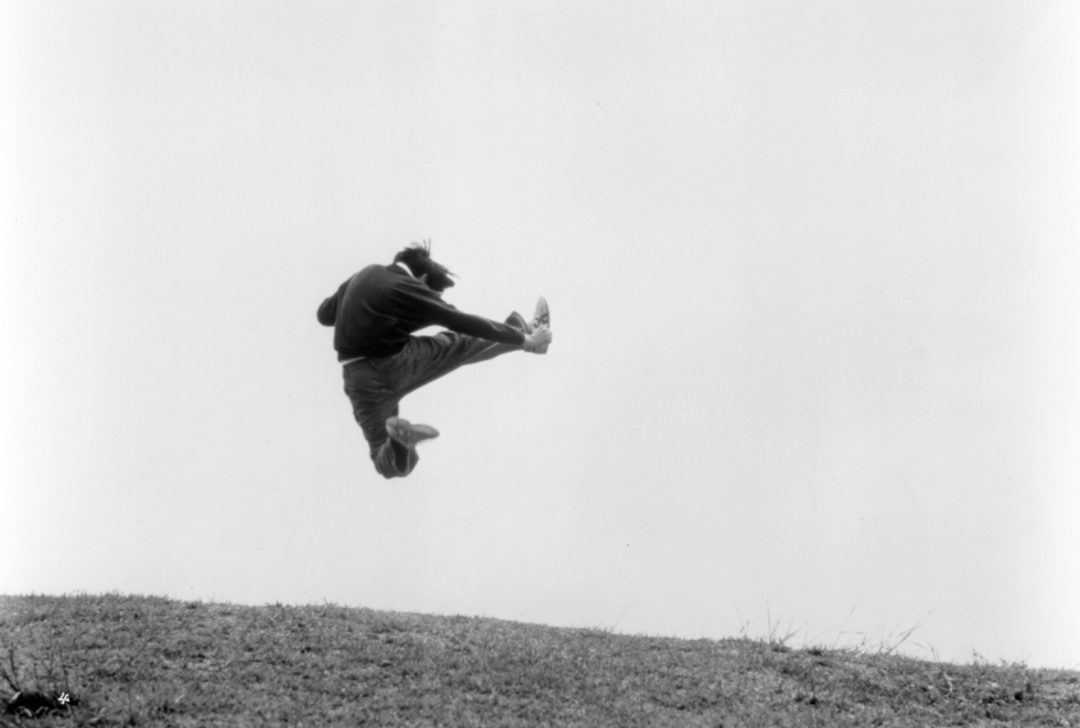
Don't Look Back, どこまでもいこう
March 11, 2025 (Tue), 19:00
March 12, 2025 (Wed), 15:00
Dir: Akihiko Shiota (塩田明彦), Prod: Hiroko Matsuda (松田広子)
1999, 74 min., 35mm, color, English subtitles
Akira (Yusaku Suzuki) and Koichi (Shingo Mizuno), who live in a housing complex, are bad seeds from the same elementary school. However, when they are placed in different classes in the fifth grade, a subtle gap begins to appear in their relationship. Initially, this is just a minor obstacle to their continued friendship, but then their relationship begins to change as the boys befriend others, and then tragedy strikes.
---
Director: Xiaolian Peng, 彭小蓮
Peng Xiaolian was a Chinese filmmaker known for her series of films about Shanghai. In the early 2000s, Yoko Shiraishi, the partner and collaborator of renowned documentary director Shinsuke Ogawa, spent three months persuading Ogawa’s disciple Peng to complete the film Red Persimmons, which Ogawa had begun in 1982 but left unfinished. Shiraishi served as producer on the film, which premiered at the Yamagata International Documentary Film Festival in 2001.
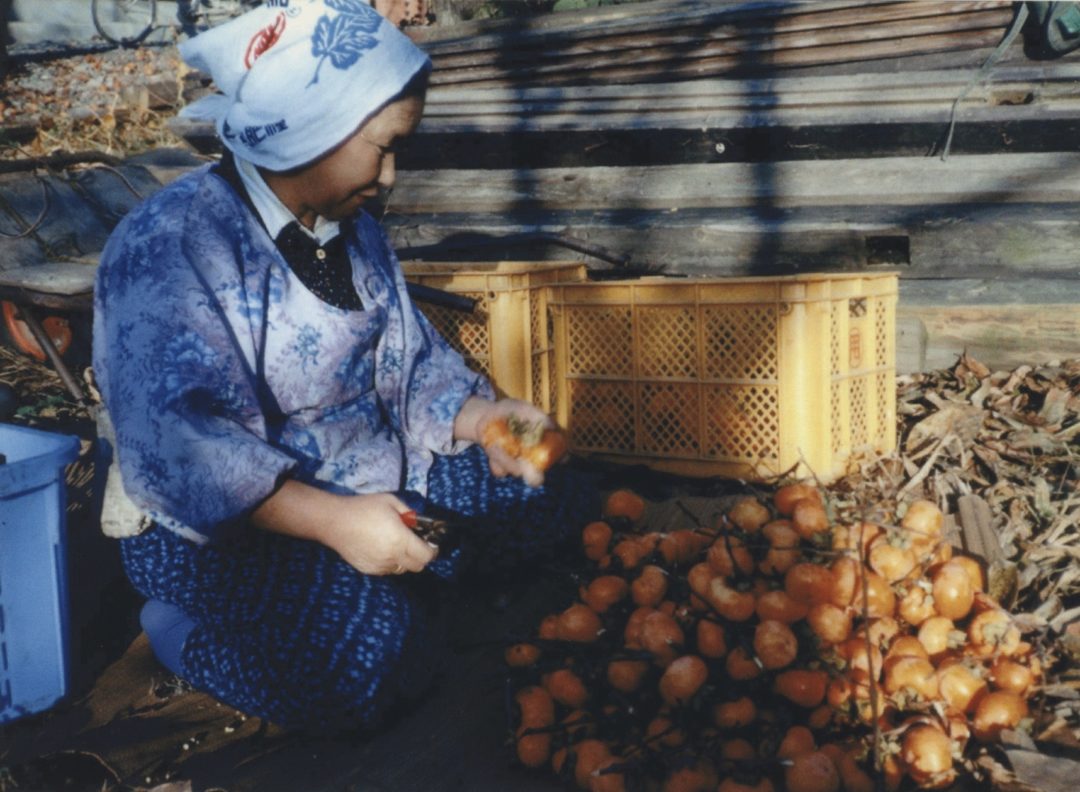
Red Persimmons, 満山紅柿
March 13, 2025 (Thu), 19:00
March 16, 2025 (Sun), 16:00
Dir: Xiaolian Peng (彭小蓮), Shinsuke Ogawa (小川紳介)
2001, 90 min., 16mm, color, English subtitles
While the subject of Red Persimmons is, on the surface, the growing, drying, peeling and packaging of persimmons in the tiny Japanese village of Kaminoyama, it’s really about the disappearance of an ancient way of life and Japan’s traditions. Based on footage shot during the shooting Magino Village: A Tale (1986, dir. Shinsuke Ogawa), Peng journeyed to Kaminoyama to complete the film six years after Ogawa's death, in response to requests from the families of the persimmon growers.
National Film Archive of Japan
Please be sure to check with the theater before going.