
NFAJ: YOSHIMITSU MORITA RETROSPECTIVE
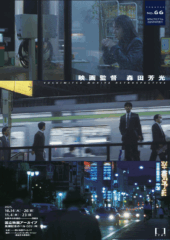
Rediscovering an Idiosyncratic Cinema Master
Venue(s): National Film Archive of JapanOctober 14 – 26, November 4 – 23, 2025
Language: 3 films are with English subtitles
Official website: www.nfaj.go.jp/english/
Theater website: www.nfaj.go.jp/calendar/?yearz=2025&month=2
Theater website: www.nfaj.go.jp/english/film-program/yoshimitsu-morita-retrospective/
Tariff: General: ¥520, Student/Senior: ¥310, Under 16: ¥100
Advance tickets: On the 3 days before the screening, find the Japanese film title on calendar and click through to the purchase page.
Talk event: Check on NFAJ's PDF file. https://www.nfaj.go.jp/wp-content/uploads/NFAJprogram66.pdf
Title: 映画監督 森田芳光 (Eiga Kantoku Morita Yoshimitsu)
Director: Yoshimitsu Morita (森田芳光)
Three years after the definitive Yoshimitsu Morita retrospective organized by Film at Lincoln Center in New York, the National Film Archive of Japan (NFAJ) is finally hosting both a retrospective and a related exhibition in its film museum, enabling fans to revisit the heralded director’s work, as well as providing an opportunity for new audiences to experience his particular brand of cross-genre genius. Just three of Morita’s films are screening with English subtitles (which sadly doesn’t include his iconic The Family Game, 1983), but you’ll want to plunge into as many titles as possible, once you’ve watched these three.
Morita (1950-2011) was a restless, prolific talent who crossed genres with consummate ease—from black comedies to pink erotica, thrillers, horror, romance, jidaigeki period epics, even idol movies—and embedded his work with striking visual motifs and cultural reflections. Over a 30-year career beginning in the 1980s, he brought a singular spin to each of his releases, as well as what Film at Lincoln Center termed “an incomparable sensitivity to the peaks and valleys of the inner landscape of Japanese society, a penchant for subtle injections of surreality to highlight the absurdity of certain aspects of Japanese life, an omnipresent sense of irony, and a boldly iconoclastic approach to visual composition.”
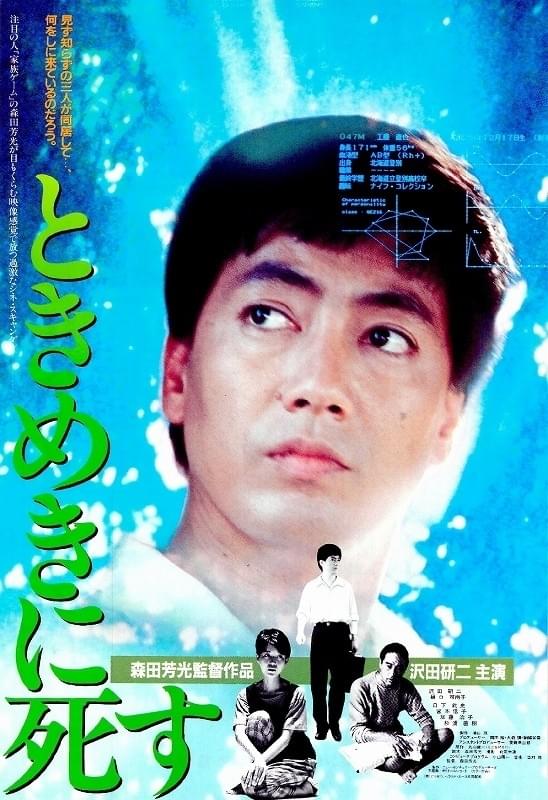
DEATHS IN TOKIMEKI ときめきに死す
 October 19 (Sun), 2025, 16:00
November 15 (Sat), 2025, 19:00
Romaji Title: Tokimeki ni Shisu
Year: 1984
Director: Yoshimitsu Morita
Duration: 104 min
Language: Japanese with English subtitles
Morita’s offbeat thriller Deaths in Tokimeki aka To Die in the Heart (Tokimeki ni Shisu, 1984), loosely adapted from Kenji Maruyama’s hardboiled novel, is a haunting portrait of disaffected lives. Starring pop icon Kenji Sawada as a hitman who is hiding in a remote villa as he preps for an upcoming job, it also features Kanako Higuchi as a young woman from his agency and Naoki Sugiura as a self-styled doctor who is taking care of the hitman. Driven by Morita’s trademark visuals (there’s a show-stopping 360-degree tracking shot around a moving car that still amazes) and a dreamy synth score by Osamu Shiomura, the film unfolds as a chamber piece with violence, desire and dread quietly intersecting. Its atmosphere, more contemplative than action-driven, has given it enduring cult status.
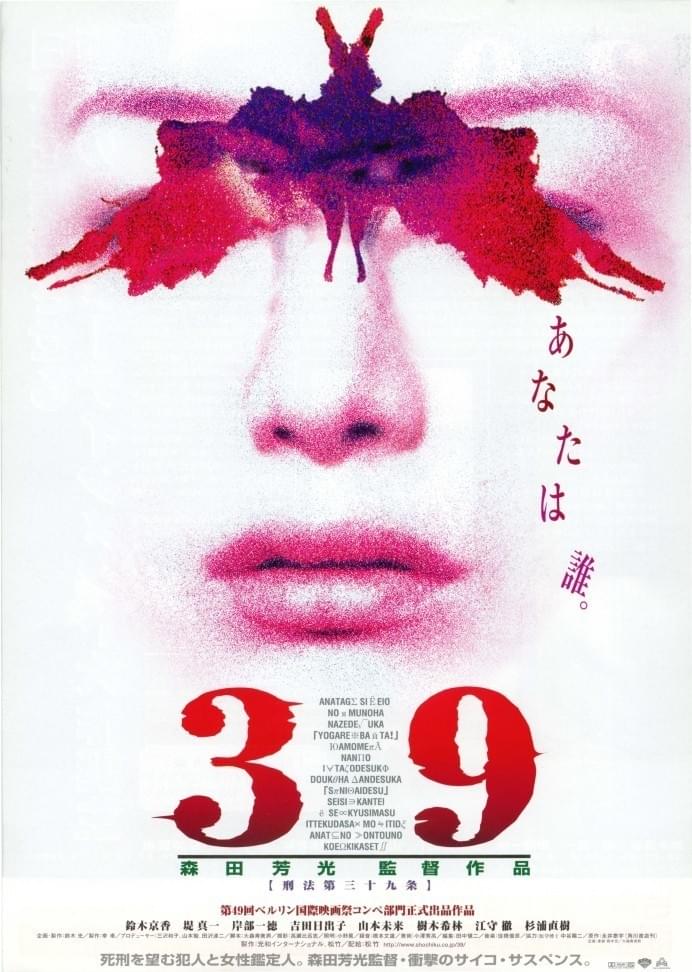
KEIHO 39 刑法第三十九条
 October 26 (Sun), 2025, 12:30★
November 18 (Tue), 2025, 18:30
Romaji Title: 39: Keiho Dai Sanjukyu Jo
Year: 1999
Director: Yoshimitsu Morita
Duration: 133 min
Language: Japanese with English subtitles
The psychological thriller-slash-social critique Keiho (39: Keihō Dai Sanjūkyū Jō, 1999) puts the viewer deep inside a double-murder case that hinges on the question of legal responsibility and mental illness. The film premiered at the Berlin Film Festival, where Kyoka Suzuki was awarded the Best Actress prize. It also stars Shinichi Tsutsumi (Two Seasons, Two Strangers) as a young actor charged with the grisly murder of a married couple. Initially cooperative with authorities, his behavior in custody is patently strange. Lawyers and psychiatrists clash over whether he suffers from dissociative identity disorder, and whether Article 39 of Japan’s penal code—which absolving or reducing punishment for the mentally ill—applies. Suzuki plays an assistant to the court-appointed psychiatrist, and based on her own experiences with mental illness, she is convinced that the actor is in fact acting to beat his murder rap. Morita pushes courtroom suspense into experimental territory, using silver-retention processing to strip colors to stark extremes. The film is a gripping meditation on justice, criminal responsibility and the fragility of truth.
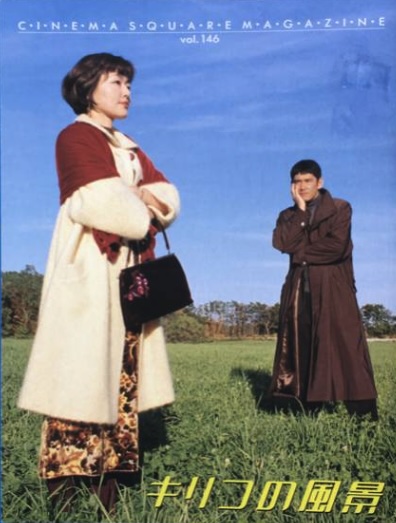
KIRIKO'S LANDSCAPE キリコの風景
 November 5 (Wed), 2025, 19:00
November 11 (Tue), 2025, 15:00
Romaji Title: Kiriko no Fukei
Year: 1998
Director: Tomoyuki Akashi
Screenplay: Yoshimitsu Morita
Duration: 105 min
Language: Japanese with English subtitles
The final title available with English subs, Kiriko’s Landscape (Kiriko no Fūkei, 1998), was directed by Tomoyuki Akashi from an original screenplay by Morita. Apparently, Morita had been so captivated by Hakodate (Hokkaido) that he established his workplace there, sensing a similarity between the city's scenery and the desolate atmosphere pervading Giorgio de Chirico's landscape paintings. He felt that “landscapes are alive too,” and penned the enigmatic original script as proof.
The film follows Muraishi, a drifter with mysterious powers (Tetta Sugimoto), who “heals” strangers’ hearts as he wanders the surreal streets of Hakodate searching for his estranged wife Kiriko (Satomi Kobayashi) after he gets out of prison. As Muraishi’s path intersects with a taxi driver and a real estate agent, and eventually with Kiriko herself, the film paints a haunting portrait of love that cannot be reclaimed. Blending noir sensibilities with wry humor, it was shot in Super 16mm and later blown up to 35mm, lending it a grainy, dreamlike texture that mirrors Morita’s poetic screenplay.
National Film Archive of Japan
Please be sure to check with the theater before going.