
PRINCESS KAGUYA
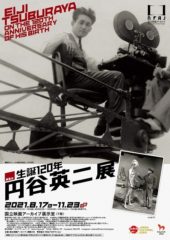
An Early Tsuburaya Film Returns to Japan
Venue(s): National Film Archive of JapanSeptember 4 (Sat) and 5 (Sun), 2021
Language: English titles with Japanese subtitles
Official website: www.nfaj.go.jp/english/exhibition/tsuburaya120/
Theater website: www.nfaj.go.jp/english/visit/access/
Tariff: General: ¥520 / Students: ¥310 / Seniors: ¥310
Title: かぐや姫 (Kaguyahime)
Director: Yoshitsugu Tanaka (田中喜次)
Duration: 33 min
You probably know the name Eiji Tsuburaya for his connection to Japan’s most famous export, Godzilla (1954), and the enduring Ultraman (1966) franchise. But the father of Japanese special effects was once also a feature-film cameraman, and an exciting recent discovery in England is being unveiled as part of the 120th Anniversary of Tsuburaya's Birth: Tsuburaya Eiji Exhibition, kicking off from August 17.
The National Film Archive of Japan (NFAJ) and Sukagawa City, with cooperation from Tsuburaya Productions, are celebrating the master’s enduring legacy with a comprehensive overview of Tsuburaya’s 50-year career, during which he provided thrilling tokusatsu special effects on approximately 250 films, as well as shooting, producing and even directing a slew more.
But the focus of the show for Japanese film completists will be the NFAJ screenings in early September of a newly found 33-minute version of the 1935 Princess Kaguya (Kaguya Hime), a film from Eiji Tsuburaya's days as a cameraman. Shot during his tenure as head cinematographer at J.O. Studios (later Toho), the tokusatsu musical drama was directed by Yoshitsugu Tanaka and based on “The Tale of the Bamboo Cutter,” a 10th-century folk tale.
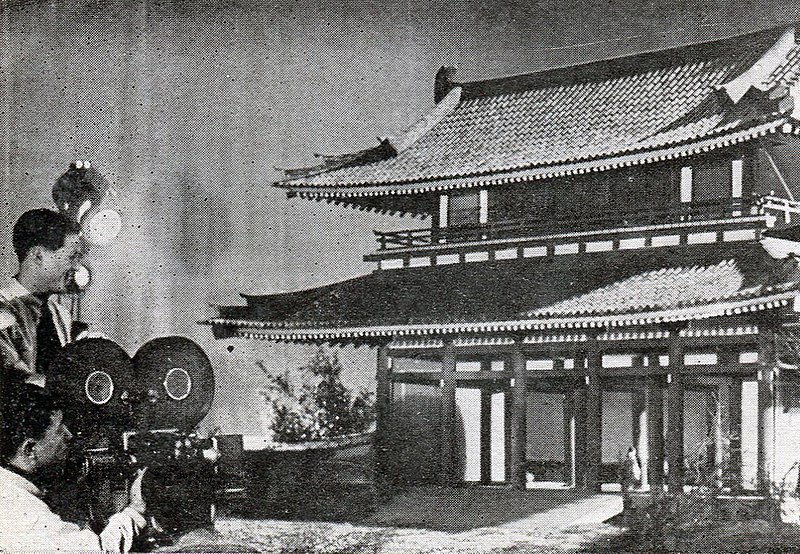
The story follows a couple who find and raise Princess Kaguya, and later, to deceive a suitor who has been courting her, spread the rumor that she has ascended to heaven, giving them time run away from Kyoto with their son, Zomaro, and Kaguya. Miniature and composite techniques were used to recreate the city of Kyoto in the film, the first of Tsuburaya’s many films with heavy usage of miniature and optical effects.
In 1980, the British Film Institute had discovered a 35mm cut of the long-lost original version of Princess Kaguya, which was 75 minutes long. More excitingly, the BFI recently found a 33-minute version that had apparently been sent to London in 1936 when the Japan Society of London and the Japanese Embassy in the UK sought to show a film based on a Japanese legend to local audiences. The Ministry of Foreign Affairs commissioned the International Motion Picture Association to select a film and supervise the creation of a shortened version (thus, the 33-minute version) with English subtitles as part of the film.
Tsuburaya began using and creating innovative filming techniques — including the first use of a camera crane in Japanese film — after joining Shochiku Kyoto Studios in 1926 and becoming a full-time cameraman there in 1927. For the 1930 film Chohichiro Matsudaira, he created an illusion using superimposition, effectively launching his special visual effects career. And the rest, as they say, is history.
National Film Archive Japan
Please be sure to check with the theater before going.