
PRINCESS YANG KWEI FEI
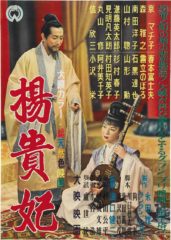
Mizoguchi’s First Color Film is Pure Eye Candy
Venue(s): National film centerNovember 22, 2017 (Wed): 19:20 -
Language: Japanese with English subtitles
Official website: www.momat.go.jp/fc/exhibition/filmclassof2017-color/
Theater website: www.momat.go.jp/english/fc/visit/information_map/#section1-4
Tariff: General: ¥520, Student/Senior: ¥310
Talk event: 15 min talk session by an NFC researcher (in Japanese)
Title: 楊貴妃 (Yokihi)
Director: Kenji Mizoguchi (溝口健二)
Duration: 91 min
Tokyo’s National Film Center in Kyobashi is a treasure trove of ongoing film screenings, highlighting its massive archive of Japan’s greatest classics.

The curators clearly relish each month’s program, often grouped by director, star, genre or inspired by a timely topic.
Alas, for readers who prefer subtitles (don’t we all?), very few of the NFC’s screenings are accessible. But here’s one that is, and it’s a doozy.
As part of their Film Class series, Kenji Mizoguchi’s 1955 Princess Yang Kwei Fei (the first of just two films the auteur made in color) is being shown once with English subs. If you’re a Mizoguchi fan, a fan of his two stars, Machiko Kyo and Masayuki Mori (so unforgettable together in the director’s earlier Ugetsu — and/or a fan of sweeping historical epics set in China, but played by Japanese actors with all the names in Japanese — this is recommended.
The film was a co-production between Daiei Film and Hong Kong’s Shaw & Sons (which was soon renamed Shaw Brothers Studio). The Shaw Brothers would remake the film in 1962 as The Magnificent Concubine, a title that is more appropriate than the original film’s, since Kwei Fei is not a princess.
As with all Mizoguchi films, this one features an oppressed female, a mere pawn stuck in the middle of palace intrigue, and it also features a story of love and sacrifice. Because it is overly expository, it is not considered his best work. But despite the “hackneyed mess of a script,” as one critic put it, the film is not without its merits, not least the director’s ability to permeate the whole with an otherworldly atmosphere and his sensuous use of color in scene after scene of aesthetic awesomeness.
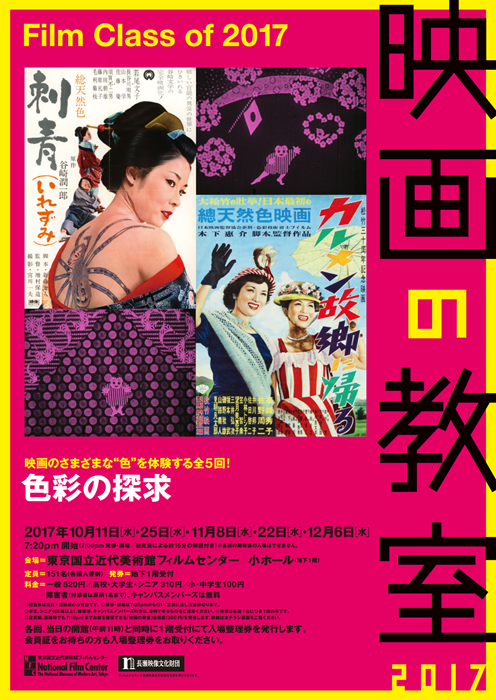
Set in 8th-century China, and a familiar story in both China and Japan, Princess Yang Kwei Fei concerns the concubine Yang and the Tang Dynasty emperor, Hsüan Tsung. In Japanese, Yang (Kyo) becomes Yohiki (the title of the film in Japanese), and Hsüan (Mori) becomes Genso. When the emperor loses his wife, courtiers vie to hook him up with a replacement of sorts, and the opportunistic Yang clan wins when the emperor notes the resemblance of Yang, a distant cousin, to his beloved wife. Soon, she is his concubine and the Yangs have the power they seek.
Genso is captivated by Yang Kwei Fei, especially after the two bond during the Lantern Festival, one of the film’s most sumptuous setpieces. But the power-hungry General An Lu Shan (in Japanese, Anrokusan) leads a revolt against the emperor, and viewers will guess who has to make the ultimate sacrifice.
National Film Center
Please be sure to check with the theater before going.