
TOKYO INTERNATIONAL FILM FESTIVAL 2016
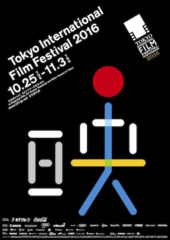
TIFF Goes Global and Local
Venue(s): Theaters in RoppongiOctober 25 (Tue) - November 3 (Thu) , 2016 Details: http://2016.tiff-jp.net/en/schedule/
Language: Japanese (and other languages) with English (and Japanese) subtitles
Official website: 2016.tiff-jp.net/en/
Tariff: Ticket sales start Oct. 15. Check TIFF’s website for all the details: http://2016.tiff-jp.net/en/ticket/
Advance tickets: Check TIFF’s website for all the details.
Talk event: Many, many, many — check TIFF’s website for all the details.
Title: 東京国際映画祭2016 (TOKYO INTERNATIONAL FILM FESTIVAL 2016)
For the second year in a row, the Tokyo International Film Festival will be nearly as local as it is global: close to 70 of its 200 titles hail from these shores, and — further cause for rejoicing — all of them will be screened with English subs. An added bonus: most will also include English-interpreted Q&A sessions or stage appearances with the filmmaking teams. Last but not least, almost all the Japanese films are screening in the Roppongi area this year, so no shuttle buses or train rides are necessary to see more than one title on the same day.
The 29th TIFF runs from October 25 – November 3, and its Japan-centric highlights range from two extraordinary titles in the main Competition selection to the world premiere of the first TIFF-Japan Foundation international coproduction, Asian Three-Fold Mirror: Reflections; a special Kabukiza program with a kabuki performance and film screenings accompanied by a benshi narrator; and retrospectives for two beloved creators, Shunji Iwai and Mamoru Hosoda, both of whom will be in attendance at their screenings.
Competition
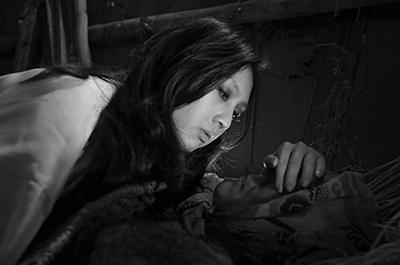
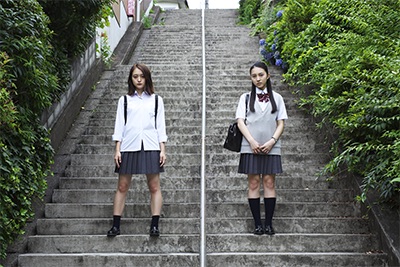
The two Japanese films in the main Competition are not to be missed: Japanese Girls Never Die is an exhilarating paean to female power (among other things) by up-and-comer Daigo Matsui, and marks Yu Aoi’s return to starring roles after 7 years. The lusciously lensed Snow Woman, Kiki Sugino’s third film as director, features Sugino as the life-sucking demon of Lafcadio Hearn’s famous ghost stories.

Sugino’s long drink of a costar, the suddenly omnipresent Munetaka Aoki, also headlines the only Japanese film in the Asian Future skein, A Woman Wavering in the Rain. Its atmospherics are remarkable, considering this is famed composer Yoshihiro Hanno’s first film.

Among several Japanese titles in the Special Screenings section, and soon to be heralded internationally, is Sunao Katabuchi’s breathtaking anime In this Corner of the World, a tender evocation of life in Hiroshima during and after WWII.

Along with other newly restored masterpieces in the Japan Classics section, don’t miss Kenji Mizoguchi’s sublime Ugetsu and Mikio Naruse’s heartbreaking Floating Clouds, both of which will be projected in 4K. And a highlight of Special Programs is the world premiere of Gekidan Shinkansen’s new theater-film hybrid Stray Nightingale, directed by Hidenori Inoue.


Among TIFF’s embarrassment of riches, the Japan Now section feels particularly rewarding. Created to showcase outstanding Japanese titles from recent and upcoming months, it provides an opportunity for those who missed them to see some of the year’s best work— and this year, two of its biggest box office smashes: the 11-film lineup includes the surprise smash Shin Godzilla, as well as the current anime juggernaut Your Name (yes, I’m purposely ignoring Toho’ punctuation). If you missed those in theaters, here’s your chance to find out what all the fuss is about.


Also featured will be Cannes prize winner Harmonium, a dark masterpiece from indie-world stalwart Koji Fukada; Kyoshi Kurosawa’s first French-language film, Daguerreotype, a haunted romance; Junji Sakamoto’s latest, the hilariously off-kilter The Projects; and the world premiere of Ryota Nakano’s Her Love Boils Bathwater, starring the luminous Rie Miyazawa as a free-spirited mom who doesn’t let cancer kill her sense of humor. Miyazawa also turns up in the unforgettable Too Young to Die!, with the best-ever heavy metal band and head-popping, fist-pumping film anthem. And if you have 5 hours to spare, here’s your chance to finally catch Ryusuke Hamaguchi’s festival-favorite Happy Hour.


The 2016 Japan Now Director in Focus is acclaimed creative force Shunji Iwai. Despite being one of Japan’s most famous exports — especially in Asia, where new Iwai releases are trumpeted like the Second Coming — the writer-director-composer-animator-novelist has not yet been the subject of a career retrospective in his own country.

Japan Now will be featuring five Iwai masterworks, from the 1993 film that kicked off his career, Fireworks: Should We See It from the Side or the Bottom?, through Love Letter (1995), Swallowtail Butterfly (1996) and his English-language debut, Vampire (2011), to his latest hit, the enchantingly enigmatic A Bride for Rip Van Winkle, with Iwai on hand for Q&A sessions.


Equally anticipated is the career retrospective The World of Mamoru Hosoda, which will screen not only Hosoda’s acclaimed feature anime (The Girl Who Leapt through Time, Summer Wars, Wolf Children, The Boy and the Beast), but also a selection of digitally remastered early work from his years with Toho Animation. Hosoda will be on hand for Q&A sessions, and will be talking on stage with several luminaries, including Hirokazu Kore-eda. If animation is your thing, be sure to check out all the other films and events, culminating at TIFF ANI!, a daylong Japanimation extravaganza.



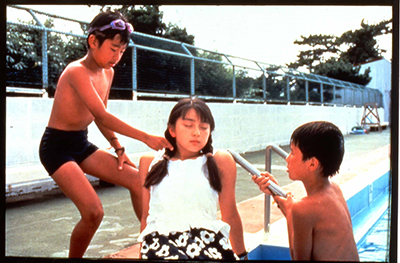
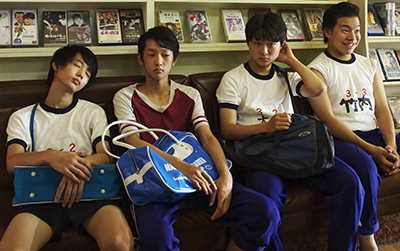
Finally, highlights from this year’s 8-film Japanese Cinema Splash, a competitive section that showcases the best in local indie film, include new work by Splash returnees Hirobumi Watanabe (of And the Mud Ship Sails Away…), with the dark thriller Poolsideman; Kenji Yamauchi (Her Father, My Lover), who debuts the hilarious verbal slap-down At the Terrace; and Rikiya Imaizumi (Their Distance, Sad Tea), with Same Old, Same Old, which looks at love, life and death. Also of note are Kaze Shindo’s (Love/Juice) return, after far too long, with the heartfelt music-themed drama Sound of Waves, starring the great Sakura Ando; the directing debut of 100 Yen Love writer Shin Adachi, 14 That Night, about a gang of pals in 1987 who hang out at the video shop; and the sophomore film from Dear Deer director Takeo Kikuchi, Hello, Goodbye.


And believe it or not, there is more, more, more — check TIFF’s website for all the details.
Toho Cinemas Roppongi Hills & Roppongi EX Theater
For the second year in a row, the Tokyo International Film Festival will be nearly as local as it is global: close to 70 of its 200 titles hail from these shores, and — further cause for rejoicing — all of them will be screened with English subs. An added bonus: most will also include English-interpreted Q&A sessions or stage appearances with the filmmaking teams. Last but not least, almost all the Japanese films are screening in the Roppongi area this year, so no shuttle buses or train rides are necessary to see more than one title on the same day.
The 29th TIFF runs from October 25 – November 3, and its Japan-centric highlights range from two extraordinary titles in the main Competition selection to the world premiere of the first TIFF-Japan Foundation international coproduction, Asian Three-Fold Mirror: Reflections; a special Kabukiza program with a kabuki performance and film screenings accompanied by a benshi narrator; and retrospectives for two beloved creators, Shunji Iwai and Mamoru Hosoda, both of whom will be in attendance at their screenings.
Competition
The two Japanese films in the main Competition are not to be missed: Japanese Girls Never Die is an exhilarating paean to female power (among other things) by up-and-comer Daigo Matsui, and marks Yu Aoi’s return to starring roles after 7 years. The lusciously lensed Snow Woman, Kiki Sugino’s third film as director, features Sugino as the life-sucking demon of Lafcadio Hearn’s famous ghost stories.
Sugino’s long drink of a costar, the suddenly omnipresent Munetaka Aoki, also headlines the only Japanese film in the Asian Future skein, A Woman Wavering in the Rain. Its atmospherics are remarkable, considering this is famed composer Yoshihiro Hanno’s first film.
Among several Japanese titles in the Special Screenings section, and soon to be heralded internationally, is Sunao Katabuchi’s breathtaking anime In this Corner of the World, a tender evocation of life in Hiroshima during and after WWII.
Along with other newly restored masterpieces in the Japan Classics section, don’t miss Kenji Mizoguchi’s sublime Ugetsu and Mikio Naruse’s heartbreaking Floating Clouds, both of which will be projected in 4K. And a highlight of Special Programs is the world premiere of Gekidan Shinkansen’s new theater-film hybrid Stray Nightingale, directed by Hidenori Inoue.
Among TIFF’s embarrassment of riches, the Japan Now section feels particularly rewarding. Created to showcase outstanding Japanese titles from recent and upcoming months, it provides an opportunity for those who missed them to see some of the year’s best work— and this year, two of its biggest box office smashes: the 11-film lineup includes the surprise smash Shin Godzilla, as well as the current anime juggernaut Your Name (yes, I’m purposely ignoring Toho’ punctuation). If you missed those in theaters, here’s your chance to find out what all the fuss is about.
Also featured will be Cannes prize winner Harmonium, a dark masterpiece from indie-world stalwart Koji Fukada; Kyoshi Kurosawa’s first French-language film, Daguerreotype, a haunted romance; Junji Sakamoto’s latest, the hilariously off-kilter The Projects; and the world premiere of Ryota Nakano’s Her Love Boils Bathwater, starring the luminous Rie Miyazawa as a free-spirited mom who doesn’t let cancer kill her sense of humor. Miyazawa also turns up in the unforgettable Too Young to Die!, with the best-ever heavy metal band and head-popping, fist-pumping film anthem. And if you have 5 hours to spare, here’s your chance to finally catch Ryusuke Hamaguchi’s festival-favorite Happy Hour.
The 2016 Japan Now Director in Focus is acclaimed creative force Shunji Iwai. Despite being one of Japan’s most famous exports — especially in Asia, where new Iwai releases are trumpeted like the Second Coming — the writer-director-composer-animator-novelist has not yet been the subject of a career retrospective in his own country.
Japan Now will be featuring five Iwai masterworks, from the 1993 film that kicked off his career, Fireworks: Should We See It from the Side or the Bottom?, through Love Letter (1995), Swallowtail Butterfly (1996) and his English-language debut, Vampire (2011), to his latest hit, the enchantingly enigmatic A Bride for Rip Van Winkle, with Iwai on hand for Q&A sessions.
Equally anticipated is the career retrospective The World of Mamoru Hosoda, which will screen not only Hosoda’s acclaimed feature anime (The Girl Who Leapt through Time, Summer Wars, Wolf Children, The Boy and the Beast), but also a selection of digitally remastered early work from his years with Toho Animation. Hosoda will be on hand for Q&A sessions, and will be talking on stage with several luminaries, including Hirokazu Kore-eda. If animation is your thing, be sure to check out all the other films and events, culminating at TIFF ANI!, a daylong Japanimation extravaganza.
Finally, highlights from this year’s 8-film Japanese Cinema Splash, a competitive section that showcases the best in local indie film, include new work by Splash returnees Hirobumi Watanabe (of And the Mud Ship Sails Away…), with the dark thriller Poolsideman; Kenji Yamauchi (Her Father, My Lover), who debuts the hilarious verbal slap-down At the Terrace; and Rikiya Imaizumi (Their Distance, Sad Tea), with Same Old, Same Old, which looks at love, life and death. Also of note are Kaze Shindo’s (Love/Juice) return, after far too long, with the heartfelt music-themed drama Sound of Waves, starring the great Sakura Ando; the directing debut of 100 Yen Love writer Shin Adachi, 14 That Night, about a gang of pals in 1987 who hang out at the video shop; and the sophomore film from Dear Deer director Takeo Kikuchi, Hello, Goodbye.
And believe it or not, there is more, more, more — check TIFF’s website for all the details.
Toho Cinemas Roppongi Hills & Roppongi EX Theater
Please be sure to check with the theater before going.