
TOKYO INTERNATIONAL FILM FESTIVAL 2020

100+ Reasons to Return to Theaters
Venue(s): Toho Cinemas Roppongi Hills, EX Theater Roppongi, Tokyo Midtown Hibiya Step Square, Tokyo International Forum, KagurazaOctober 31 (Sun) - November 9 (Tue), 2020 Details: https://2020.tiff-jp.net/en/schedule/list/2020-10-31
Language: Japanese (and other languages) with English (and Japanese) subtitles
Official website: 2020.tiff-jp.net/en/
Theater website: 2020.tiff-jp.net/en/access/
Tariff: Please check the official site: https://2020.tiff-jp.net/en/ticket/
Advance tickets: https://2020.tiff-jp.net/en/ticket/ If sold out online, the box office has day-of sales
Talk event: Many in person as well as online — check TIFF’s website for all the details.
Title: 東京国際映画祭2020 (Tokyo Kokusai Eigasai 2020)
If you are in Tokyo, rejoice: the Tokyo International Film Festival is rolling out more than 100 films, many of them world premieres, for its 33rd edition. The screenings will all be held physically, with strict Covid-19 safety measures in place, from October 31 – November 9 at theaters primarily in Roppongi. Many international festivals have been forced to cancel this year due to the pandemic, and others have been limited by theater closures in their host cities, so this is great news for film lovers with small-screen fatigue.
Thirty-two of the titles (10 from Japan, 10 from the US/Europe and 12 from Asia) have been selected to receive the new ‘Tokyo Premiere 2020’ label, making them eligible for an Audience Award to be chosen by viewers. Because international guests aren’t able to attend in person, and thus an international jury could not be formed, this is the only award that will be bestowed.
 Other changes have been made to accommodate the new normal, but the most welcome one is the launch of the nightly Asia Lounge Conversation Series, a new initiative proposed (and to be moderated occasionally) by Palme d’Or winner Hirokazu Kore-eda, a collaboration between TIFF and the Japan Foundation Asia Center. The talks pair up leading filmmakers from throughout Asia with their peers in Japan, and can be streamed on TIFF’s YouTube channel.
As ever, TIFF’s films are all subtitled in English. The homegrown films will also feature English-interpreted Q&A sessions with the filmmakers and stars, and if you watch non-Japanese titles, you’ll be able to view online Q&As for some of them.
Over 3 dozen Japanese titles will be shown, including many animated films, remastered classics, upcoming commercial releases and new work by emerging directors. This year’s Japan-centric highlights include the Opening and Closing films, both of which are world premieres.
There are also three films made primarily in Japan (in several languages) by non-Japanese filmmakers, which offer unique visions and should be seen: Come and Go by Lim Kah Wai, Light of a Burning Moth by Liao Jiekai, and Malu by Edmund Yeo, who won the Best Director Award at TIFF in 2017 with Aqerah.
Here are just a handful of our recommendations, in order of sections. We urge you to explore the full lineup, since there are many, many more films to savor.
Opening Film: Underdog
Underdog
Director: Masaharu Take
©2020 UNDERDOG FILM PARTNERS
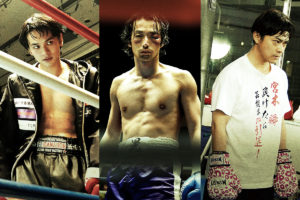
Director Masaharu Take (Netflix’s The Naked Director) reassembled the crew of his 2014 megahit 100 Yen Love, including award-winning writer Shin Adachi, to mount 8 episodes of a VOD drama about a trio of loser boxers. As is the current trend in Japan, he then cut it down to 276 minutes for release as a two-part feature film, with each half ending in a protracted, bloody match. The protagonist in both halves is Akira (Mirai Moriyama of Samurai Marathon, Rage), a man on the brink of divorce after his latest loss in an embarrassing rout. While once ranked No. 1 in Japan’s bantamweight division, he’s seen his fortunes dwindle as he approaches middle age.
In the first half, his opponent is a failing comedian with father issues, Shun (Ryo Katsuji of Masquerade Hotel, a standout here), who sets up an exhibition match with Akira for a TV sketch show and then, unexpectedly, views it as a way to redeem himself, both in his father’s eyes and also his own. In the second half, Akira is challenged by Ryuta (Takumi Kitamura of 12 Suicidal Teens), a new father who’s KO’ed all his previous opponents. Despite his best instincts, Akira is convinced to go the distance.
Closing Film: Hokusai
Hokusai
Director: Hajime Hashimoto
©2020 HOKUSAI MOVIE
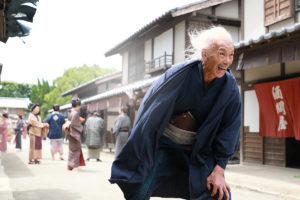
Made to celebrate the acclaimed ukiyo-e woodblock artist’s 260th anniversary, this intriguing film by Hajime Hashimoto provides an altogether different vision of his life than Keiichi Hara’s 2015 anime Miss Hokusai, which was also featured at TIFF. Dark and rather bleak, albeit beautifully lensed, it focuses on two crucial periods of Katsushika Hokusai’s artistic creativity: his discovery in youth by a prescient publisher who saves him from abject poverty and encourages him to indulge his obsession with the natural world; and his late-life fight against the Edo government's clampdown on the arts and freedom of expression in the early 1800s.
In the first part, young Hokusai (Yuya Yagira of Nobody Knows, Destruction Babies) is rescued by publisher Juzaburo Tsutaya (Hiroshi Abe of Thermae Romae); and in the second, old Hokusai (Min Tanaka of The Scythian Lamb) befriends a popular samurai-playwright, Tanehiko Ryutei (Eita Nagayama of Monster Club), and begins illustrating his work. When he discovers that Ryutei has been crushed by the shogunate for refusing to stop writing, he vows to take artistic revenge (in one of the film’s most incredible set pieces).
Tokyo Premiere 2020 films
Hold Me Back
Director: Akiko Ohku
©2020 "Hold Me Back"film partners
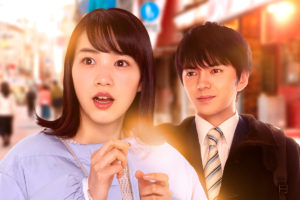
Akiko Ohku, whose global acclaim arrived with the 2017 TIFF Audience Award winner Tremble All You Want, has since made several films. This one, world premiering at TIFF, is sure to prompt the most favorable comparisons with her earlier box-office hit. Like that film, Hold Me Back takes us into the lonely life and interior thoughts of a bubbly young woman, and follows her until she has a minor epiphany.
Mitsuko (Non of Princess Jellyfish and Amachan), is 31 and happily single. “Single” doesn’t really describe her life, though, since she has a soothing voice in her head, dubbed Counselor A, who helps her make decisions, dispenses advice and calms her down. When she starts falling for a salesman who visits her company and seems just as uncertain of himself, Tada (Kento Hayashi of Spark), A convinces her to make a move. It’s the right move, at least at first, and their budding romance/menage a trois is very sweet. But when Mitsuko tries to assert her right to independence, things begin to unravel.

Zokki
Director: Naoto Takenaka,Takayuki Yamada,Takumi Saitoh
©2021 ZOKKI Production Committee
Adapting Hiroki Ohashi’s cult manga series with a title meaning ‘something randomly put together,’ three of Japan’s most talented and prolific actor-directors — Naoto Takenaka, Takayuki Yamada and Takumi Saitoh — have come together to create three loosely-connected stories about off-kilter characters living in “an obscure corner” of the world. One could make a case that the overall theme is secrets and lies, but there is little else cohesive about the tales. Yet you are sure to embrace the chaos, as we were, for this is one of the most unexpectedly joyful viewing experiences we’ve had in a long time, puerile potty jokes and all.
In episode 1, Ryoko’s grandfather asks her, “If we confess all our secrets, would we then die?” “How many do you have?” she asks. “230” he promptly answers. In episode 2, Fujimura (Ryohei Matsuda of The Scythian Lamb) takes off on his bike to the great unknown, encounters fellow travelers like Shinnosuke Mitsushima (Tokyo Vampire Hotel), and finally crashes a fishery-worker’s birthday party, where he admits, “I’m traveling aimlessly, but I don’t need to because I’ve lived aimlessly.” In episode 3, two high-school losers, Makino and Ban (an extraordinary Joe Kujo) become friends until Ban admits he’s obsessed with Makino’s older sister: “Please let me meet her!” he begs. “Or sell me her panties!” Trouble is, Makino has lied about her…
Special Screenings

Ora, Ora Be Goin' Alone
Director: Shuichi Okita
©2020 "Ora, Ora Be Goin' Alone" Film Partners
Last year, seasoned veteran Yuko Tanaka played a murderous matriarch in Kazuya Shiraishi’s dark melodrama One Night, another in a long line of expertly-acted supporting roles as a mother. It’s about time that she got a film entirely to herself, and the warmly amusing Ora, Ora Be Goin’ Alone is the right kind of film, as she plays a woman whose smile almost literally lights up the screen.
As Momoko, a 75-year-old widow living alone in the suburbs of Tokyo, she has become her own best company, passing her days reading books about and sketching images of earth’s 4.6-billion-year history, drinking tea, waiting in long lines at various medical establishments and pondering the lease of a Honda SUV. Fortunately, she is always accompanied by the voices in her head (hilariously embodied by Gaku Hamada, Munetaka Aoki and Kankuro Kudo), and they often break into rousing song-and-dance routines when least expected.
Beloved filmmaker Shuichi Okita’s (Mori, the Artist's Habitat, The Mohican Comes Home) latest work will probably best be appreciated by an older audience, but that doesn’t preclude all of those with aging parents, grandparents or friends of a certain age. If there is a cure for staving off dementia, Momoko has surely found it. As she revisits her early years (where she’s played by Yu Aoi), we recognize what a joy her life once, and feel certain that the spark is being relit.
World Focus

Along the Sea
Director: Akio Fujimoto
©2020 E.x.N K.K. / ever rolling films
TIFF honoree Akio Fujimoto, a double award-winner with his heartbreaking Passage of Life in 2018, is back with another moving work devoted to the underbelly of the immigrant experience in Japan, Along the Sea. Like his debut feature, this one feels so much like a documentary that you’ll have to keep reminding yourself it was scripted, and that two of the three stars are actually veteran actresses in their native Vietnam.
The film opens with the helter-skelter escape of the women, who are “technical trainees” being exploited and held nearly captive by their Japanese employer, as well as by the brokers who have charged them enormous fees to get these coveted jobs in Japan. They make their way to a town somewhere on Japan's northwest coast, and begin working at a fishery (they are led to believe they were getting housekeeping jobs). When one of the women (beautifully underplayed by Hoang Phuong, star of 2019 Vietnam-China-U.S. co-production Invisible Love) realizes she’s pregnant, the others urge her to get a secret abortion so as not to jeopardize their illegal jobs. But without identity papers, she’s not able to get an insurance card nor to be properly treated…
Along the Sea had its world premiere in the New Directors competition at the 2020 San Sebastian Film Festival, and this distressing look at a dilemma that is apparently widespread among undocumented workers in Japan is sure to get extensive international play. See it at TIFF, where the filmmaking team will be present for the Q&A.
True North
Director: Eiji Han Shimizu
©SUMIMASEN
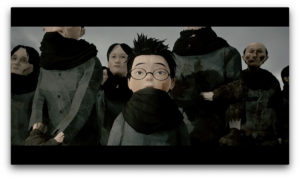
In one of those harrowing stories that somehow benefits by being told through animation, writer-director-producer-editor Eiji Han Shimizu takes us inside one of North Korea’s five known camps for political prisoners, which are estimated to house a total of 200,000-300,000 internees who have been forced into hard labor. The film focuses on one family and the subhuman conditions in which they find themselves living, after the father has been accused of a political crime against the state. The inmates are barely fed, subjected to torture and the constant fear that they may be shot, and they must swear their allegiance to the Supreme Leader, Kim Jong Il (the film is set in the 1990s).
A Zainichi Korean born and raised in Osaka, Shimizu based True North on accounts from camp survivors and former guards, and it’s a tribute to his storytelling skills that he makes this not only a condemnation, but also a tribute to the endurance of the human spirit even in the most dire conditions.
Japan Now

Director: Koji Fukada
This year’s Japan Now section is showcasing just one award-winning filmmaker, Koji Fukada, who has been selected as the Director in Focus. But it's not only because of his acclaimed work: Fukada plays a uniquely activist role in the Japanese film industry, and is an outspoken advocate for a less exploited, more sustainable independent film industry. In 2020, he helped launch the Mini-Theater Aid crowdfunding campaign to prop up arthouse cinemas amid the Covid pandemic. He is also a cofounder of the Independent Cinema Guild, a support group that works to arrest the serious imbalance in the diversity of films being produced in this country.
The Real Thing
Director: Koji Fukada
©Mochiru Hoshisato, Shogakukan / NagoyaTV
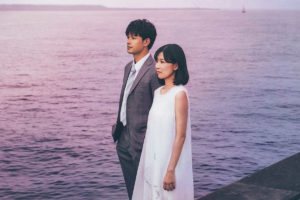
If you haven’t seen all his work, now is your chance to explore it, and to attend Q&A sessions with the writer-director and his stars. TIFF is highlighting four of his feature films, including the brand new — and Cannes Premiere 2020-labeled — The Real Thing, a nearly 4-hour opus about a consummately dull salaryman whose life is overturned by an eccentric woman. Also on screen will be his first international hit, Hospitalité (2010) and the Cannes Jury Prizewinner Harmonium (2016), as well as a range of shorts from 2006-2020.
Japanese Animation Section
For fans of anime, and we know you are legion, the Japanese Animation Section will feature a package of Pokémon movies, the hotly-anticipated Violet Evergarden: the Movie, summer hit Words Bubble Up Like Soda Pop, Annecy awardee Seven Days War and a tribute to tokusatsu sensation Gorenger/Super Sentai, on the 45th anniversary of the series.

Violet Evergarden: the Movie
Director: Taichi Ishidate
©Kana Akatsuki,Kyoto Animation/Violet Evergarden Production Committee
Japanese Classics
Humanity and Paper Balloons 4K Digitally Restored Version
Director: Sadao Yamanaka
©1937 Toho Co., LTD.
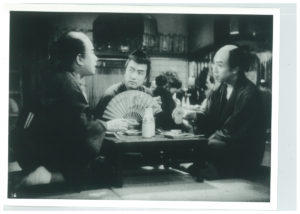
Finally, if you’re looking for something a bit more old-school, look no further than TIFF Classics, which this year features such highlights as the 4K digitally restored Humanity and Paper Balloons (Sadao Yamanaka, 1937) and Hiroshi Inagaki’s The Rickshaw Man (1943), which will be preceded by a short 2020 documentary about the film, Wheels of Fate: The Story of the Rickshaw Man, directed by Ema Ryan Yamazaki.

The Rickshaw Man [4K Digitally Restored Version]
Director: Hiroshi Inagaki
©KADOKAWA1943 ©Cineric Creative / KADOKAWA 2020
Toho Cinemas Roppongi Hills & Roppongi EX Theater
Hibiya Step Square, Tokyo Midtown Hibiya
東京国際映画祭2020 (Tokyo Kokusai Eigasai 2020)
Venue: Toho Cinemas Roppongi Hills, EX Theater Roppongi, Tokyo Midtown Hibiya Step Square, Tokyo International Forum
Dates: October 31 (Sun) - November 9 (Tue), 2020
Details: https://2020.tiff-jp.net/en/schedule/list/2020-10-31
Official website: 2020.tiff-jp.net/en/
Theater website: 2020.tiff-jp.net/en/access/
Tariff: Please check the official site: https://2020.tiff-jp.net/en/ticket/
Advance tickets: https://2020.tiff-jp.net/en/ticket/ If sold out online, the box office has day-of sales
Talk event: Many in person as well as online — check TIFF’s website for all the details.
If you are in Tokyo, rejoice: the Tokyo International Film Festival is rolling out more than 100 films, many of them world premieres, for its 33rd edition. The screenings will all be held physically, with strict Covid-19 safety measures in place, from October 31 – November 9 at theaters primarily in Roppongi. Many international festivals have been forced to cancel this year due to the pandemic, and others have been limited by theater closures in their host cities, so this is great news for film lovers with small-screen fatigue.
Thirty-two of the titles (10 from Japan, 10 from the US/Europe and 12 from Asia) have been selected to receive the new ‘Tokyo Premiere 2020’ label, making them eligible for an Audience Award to be chosen by viewers. Because international guests aren’t able to attend in person, and thus an international jury could not be formed, this is the only award that will be bestowed.
Other changes have been made to accommodate the new normal, but the most welcome one is the launch of the nightly Asia Lounge Conversation Series, a new initiative proposed (and to be moderated occasionally) by Palme d’Or winner Hirokazu Kore-eda, a collaboration between TIFF and the Japan Foundation Asia Center. The talks pair up leading filmmakers from throughout Asia with their peers in Japan, and can be streamed on TIFF’s YouTube channel.
As ever, TIFF’s films are all subtitled in English. The homegrown films will also feature English-interpreted Q&A sessions with the filmmakers and stars, and if you watch non-Japanese titles, you’ll be able to view online Q&As for some of them.
Over 3 dozen Japanese titles will be shown, including many animated films, remastered classics, upcoming commercial releases and new work by emerging directors. This year’s Japan-centric highlights include the Opening and Closing films, both of which are world premieres.
There are also three films made primarily in Japan (in several languages) by non-Japanese filmmakers, which offer unique visions and should be seen: Come and Go by Lim Kah Wai, Light of a Burning Moth by Liao Jiekai, and Malu by Edmund Yeo, who won the Best Director Award at TIFF in 2017 with Aqerah.
Here are just a handful of our recommendations, in order of sections. We urge you to explore the full lineup, since there are many, many more films to savor.
Opening Film: Underdog
Underdog
Director: Masaharu Take
©2020 UNDERDOG FILM PARTNERS
Director Masaharu Take (Netflix’s The Naked Director) reassembled the crew of his 2014 megahit 100 Yen Love, including award-winning writer Shin Adachi, to mount 8 episodes of a VOD drama about a trio of loser boxers. As is the current trend in Japan, he then cut it down to 276 minutes for release as a two-part feature film, with each half ending in a protracted, bloody match. The protagonist in both halves is Akira (Mirai Moriyama of Samurai Marathon, Rage), a man on the brink of divorce after his latest loss in an embarrassing rout. While once ranked No. 1 in Japan’s bantamweight division, he’s seen his fortunes dwindle as he approaches middle age.
In the first half, his opponent is a failing comedian with father issues, Shun (Ryo Katsuji of Masquerade Hotel, a standout here), who sets up an exhibition match with Akira for a TV sketch show and then, unexpectedly, views it as a way to redeem himself, both in his father’s eyes and also his own. In the second half, Akira is challenged by Ryuta (Takumi Kitamura of 12 Suicidal Teens), a new father who’s KO’ed all his previous opponents. Despite his best instincts, Akira is convinced to go the distance.
Closing Film: Hokusai
Hokusai
Director: Hajime Hashimoto
©2020 HOKUSAI MOVIE
Made to celebrate the acclaimed ukiyo-e woodblock artist’s 260th anniversary, this intriguing film by Hajime Hashimoto provides an altogether different vision of his life than Keiichi Hara’s 2015 anime Miss Hokusai, which was also featured at TIFF. Dark and rather bleak, albeit beautifully lensed, it focuses on two crucial periods of Katsushika Hokusai’s artistic creativity: his discovery in youth by a prescient publisher who saves him from abject poverty and encourages him to indulge his obsession with the natural world; and his late-life fight against the Edo government's clampdown on the arts and freedom of expression in the early 1800s.
In the first part, young Hokusai (Yuya Yagira of Nobody Knows, Destruction Babies) is rescued by publisher Juzaburo Tsutaya (Hiroshi Abe of Thermae Romae); and in the second, old Hokusai (Min Tanaka of The Scythian Lamb) befriends a popular samurai-playwright, Tanehiko Ryutei (Eita Nagayama of Monster Club), and begins illustrating his work. When he discovers that Ryutei has been crushed by the shogunate for refusing to stop writing, he vows to take artistic revenge (in one of the film’s most incredible set pieces).
Tokyo Premiere 2020 films
Hold Me Back
Director: Akiko Ohku
©2020 "Hold Me Back"film partners
Akiko Ohku, whose global acclaim arrived with the 2017 TIFF Audience Award winner Tremble All You Want, has since made several films. This one, world premiering at TIFF, is sure to prompt the most favorable comparisons with her earlier box-office hit. Like that film, Hold Me Back takes us into the lonely life and interior thoughts of a bubbly young woman, and follows her until she has a minor epiphany.
Mitsuko (Non of Princess Jellyfish and Amachan), is 31 and happily single. “Single” doesn’t really describe her life, though, since she has a soothing voice in her head, dubbed Counselor A, who helps her make decisions, dispenses advice and calms her down. When she starts falling for a salesman who visits her company and seems just as uncertain of himself, Tada (Kento Hayashi of Spark), A convinces her to make a move. It’s the right move, at least at first, and their budding romance/menage a trois is very sweet. But when Mitsuko tries to assert her right to independence, things begin to unravel.
Zokki
Director: Naoto Takenaka,Takayuki Yamada,Takumi Saitoh
©2021 ZOKKI Production Committee
Adapting Hiroki Ohashi’s cult manga series with a title meaning ‘something randomly put together,’ three of Japan’s most talented and prolific actor-directors — Naoto Takenaka, Takayuki Yamada and Takumi Saitoh — have come together to create three loosely-connected stories about off-kilter characters living in “an obscure corner” of the world. One could make a case that the overall theme is secrets and lies, but there is little else cohesive about the tales. Yet you are sure to embrace the chaos, as we were, for this is one of the most unexpectedly joyful viewing experiences we’ve had in a long time, puerile potty jokes and all.
In episode 1, Ryoko’s grandfather asks her, “If we confess all our secrets, would we then die?” “How many do you have?” she asks. “230” he promptly answers. In episode 2, Fujimura (Ryohei Matsuda of The Scythian Lamb) takes off on his bike to the great unknown, encounters fellow travelers like Shinnosuke Mitsushima (Tokyo Vampire Hotel), and finally crashes a fishery-worker’s birthday party, where he admits, “I’m traveling aimlessly, but I don’t need to because I’ve lived aimlessly.” In episode 3, two high-school losers, Makino and Ban (an extraordinary Joe Kujo) become friends until Ban admits he’s obsessed with Makino’s older sister: “Please let me meet her!” he begs. “Or sell me her panties!” Trouble is, Makino has lied about her…
Special Screenings
Ora, Ora Be Goin' Alone
Director: Shuichi Okita
©2020 "Ora, Ora Be Goin' Alone" Film Partners
Last year, seasoned veteran Yuko Tanaka played a murderous matriarch in Kazuya Shiraishi’s dark melodrama One Night, another in a long line of expertly-acted supporting roles as a mother. It’s about time that she got a film entirely to herself, and the warmly amusing Ora, Ora Be Goin’ Alone is the right kind of film, as she plays a woman whose smile almost literally lights up the screen.
As Momoko, a 75-year-old widow living alone in the suburbs of Tokyo, she has become her own best company, passing her days reading books about and sketching images of earth’s 4.6-billion-year history, drinking tea, waiting in long lines at various medical establishments and pondering the lease of a Honda SUV. Fortunately, she is always accompanied by the voices in her head (hilariously embodied by Gaku Hamada, Munetaka Aoki and Kankuro Kudo), and they often break into rousing song-and-dance routines when least expected.
Beloved filmmaker Shuichi Okita’s (Mori, the Artist's Habitat, The Mohican Comes Home) latest work will probably best be appreciated by an older audience, but that doesn’t preclude all of those with aging parents, grandparents or friends of a certain age. If there is a cure for staving off dementia, Momoko has surely found it. As she revisits her early years (where she’s played by Yu Aoi), we recognize what a joy her life once, and feel certain that the spark is being relit.
World Focus
Along the Sea
Director: Akio Fujimoto
©2020 E.x.N K.K. / ever rolling films
TIFF honoree Akio Fujimoto, a double award-winner with his heartbreaking Passage of Life in 2018, is back with another moving work devoted to the underbelly of the immigrant experience in Japan, Along the Sea. Like his debut feature, this one feels so much like a documentary that you’ll have to keep reminding yourself it was scripted, and that two of the three stars are actually veteran actresses in their native Vietnam.
The film opens with the helter-skelter escape of the women, who are “technical trainees” being exploited and held nearly captive by their Japanese employer, as well as by the brokers who have charged them enormous fees to get these coveted jobs in Japan. They make their way to a town somewhere on Japan's northwest coast, and begin working at a fishery (they are led to believe they were getting housekeeping jobs). When one of the women (beautifully underplayed by Hoang Phuong, star of 2019 Vietnam-China-U.S. co-production Invisible Love) realizes she’s pregnant, the others urge her to get a secret abortion so as not to jeopardize their illegal jobs. But without identity papers, she’s not able to get an insurance card nor to be properly treated…
Along the Sea had its world premiere in the New Directors competition at the 2020 San Sebastian Film Festival, and this distressing look at a dilemma that is apparently widespread among undocumented workers in Japan is sure to get extensive international play. See it at TIFF, where the filmmaking team will be present for the Q&A.
True North
Director: Eiji Han Shimizu
©SUMIMASEN
In one of those harrowing stories that somehow benefits by being told through animation, writer-director-producer-editor Eiji Han Shimizu takes us inside one of North Korea’s five known camps for political prisoners, which are estimated to house a total of 200,000-300,000 internees who have been forced into hard labor. The film focuses on one family and the subhuman conditions in which they find themselves living, after the father has been accused of a political crime against the state. The inmates are barely fed, subjected to torture and the constant fear that they may be shot, and they must swear their allegiance to the Supreme Leader, Kim Jong Il (the film is set in the 1990s).
A Zainichi Korean born and raised in Osaka, Shimizu based True North on accounts from camp survivors and former guards, and it’s a tribute to his storytelling skills that he makes this not only a condemnation, but also a tribute to the endurance of the human spirit even in the most dire conditions.
Japan Now
Director: Koji Fukada
This year’s Japan Now section is showcasing just one award-winning filmmaker, Koji Fukada, who has been selected as the Director in Focus. But it's not only because of his acclaimed work: Fukada plays a uniquely activist role in the Japanese film industry, and is an outspoken advocate for a less exploited, more sustainable independent film industry. In 2020, he helped launch the Mini-Theater Aid crowdfunding campaign to prop up arthouse cinemas amid the Covid pandemic. He is also a cofounder of the Independent Cinema Guild, a support group that works to arrest the serious imbalance in the diversity of films being produced in this country.
The Real Thing
Director: Koji Fukada
©Mochiru Hoshisato, Shogakukan / NagoyaTV
If you haven’t seen all his work, now is your chance to explore it, and to attend Q&A sessions with the writer-director and his stars. TIFF is highlighting four of his feature films, including the brand new — and Cannes Premiere 2020-labeled — The Real Thing, a nearly 4-hour opus about a consummately dull salaryman whose life is overturned by an eccentric woman. Also on screen will be his first international hit, Hospitalité (2010) and the Cannes Jury Prizewinner Harmonium (2016), as well as a range of shorts from 2006-2020.
Japanese Animation Section
For fans of anime, and we know you are legion, the Japanese Animation Section will feature a package of Pokémon movies, the hotly-anticipated Violet Evergarden: the Movie, summer hit Words Bubble Up Like Soda Pop, Annecy awardee Seven Days War and a tribute to tokusatsu sensation Gorenger/Super Sentai, on the 45th anniversary of the series.
Violet Evergarden: the Movie
Director: Taichi Ishidate
©Kana Akatsuki,Kyoto Animation/Violet Evergarden Production Committee
Japanese Classics
Humanity and Paper Balloons 4K Digitally Restored Version
Director: Sadao Yamanaka
©1937 Toho Co., LTD.
Finally, if you’re looking for something a bit more old-school, look no further than TIFF Classics, which this year features such highlights as the 4K digitally restored Humanity and Paper Balloons (Sadao Yamanaka, 1937) and Hiroshi Inagaki’s The Rickshaw Man (1943), which will be preceded by a short 2020 documentary about the film, Wheels of Fate: The Story of the Rickshaw Man, directed by Ema Ryan Yamazaki.
The Rickshaw Man [4K Digitally Restored Version]
Director: Hiroshi Inagaki
©KADOKAWA1943 ©Cineric Creative / KADOKAWA 2020
Toho Cinemas Roppongi Hills & Roppongi EX Theater
Hibiya Step Square, Tokyo Midtown Hibiya
東京国際映画祭2020 (Tokyo Kokusai Eigasai 2020)
Venue: Toho Cinemas Roppongi Hills, EX Theater Roppongi, Tokyo Midtown Hibiya Step Square, Tokyo International Forum
Dates: October 31 (Sun) - November 9 (Tue), 2020
Details: https://2020.tiff-jp.net/en/schedule/list/2020-10-31
Official website: 2020.tiff-jp.net/en/
Theater website: 2020.tiff-jp.net/en/access/
Tariff: Please check the official site: https://2020.tiff-jp.net/en/ticket/
Advance tickets: https://2020.tiff-jp.net/en/ticket/ If sold out online, the box office has day-of sales
Talk event: Many in person as well as online — check TIFF’s website for all the details.
Please be sure to check with the theater before going.