
WHEN IT RAINS, IT POURS — KEIJI SADA CENTENARY RETROSPECTIVE
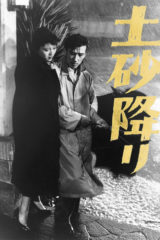
A Mid-Century Melodrama that Still Resonates
Venue(s): Jinbocho TheaterFrom January 24 - January 30 (Fri), 2026.
Language: Japanese with English subtitles
Official website: www.shogakukan.co.jp/jinbocho-theater/program/2026_sada_100th.html
Theater website: www.shogakukan.co.jp/jinbocho-theater/
Theater website: www.shogakukan.co.jp/jinbocho-theater/guide/index.html
Tariff: Check the theater websites.
Advance tickets: Visit theater site for details.
Title: 土砂降り、生誕100年 俳優・佐田啓二 (Doshaburi, Seitan 100 Nen Haiyu Sada Keiji)
Director: Noboru Nakamura (中村登)
Duration: 105 min
Jimbocho Theater is marking the 100th anniversary of the birth of actor Keiji Sada (1926–1964) with a special retrospective. Although just one film will be screened with English subtitles, this is a unique opportunity to discover the brief but luminous career of one of cinema’s most popular mid-century stars, in a Shochiku classic that still resonates with unsettling force. As always, we encourage you to explore all the films in the tribute, since this is a rare exploration of Sada’s legacy.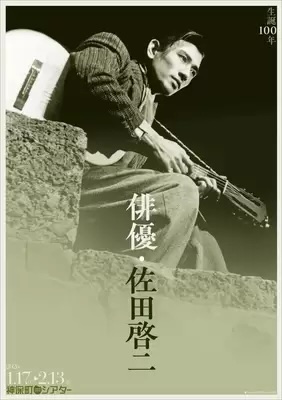
Sada hailed from a Kyoto merchant family and attended Waseda University before being offered a film role immediately after his graduation. Amazingly, his 1947 debut was in Phoenix, directed by Keisuke Kinoshita, and he had a love scene with major star Kinuyo Tanaka. Sada’s career promptly took off and he snagged the lead role in his next film, Kane no Naru Oka, the final chapter in the Ringing Bell Hill trilogy based on a popular NHK radio drama.
Sada starred in an average of 8 to 10 movies a year in the 1950s, and won Best Actor at both the Mainichi Film Award and Blue Ribbon Awards for his role in Masaki Kobayashi’s I Will Buy You (1956), about ethics breaches in Japanese baseball. He was killed in a traffic accident in 1964, at the height of his fame, leaving behind a wife and two children. His son is prolific actor Kiichi Nakai.

Sada’s 1957 film When It Rains, It Pours aka Cloudburst (Doshaburi) is a devastating melodrama directed by Noboru Nakamura, one of Shochiku’s masters of emotional restraint and social realism. Adapted from a work by playwright Hideji Hojo, the film is considered a milestone of 1950s Japanese melodrama.
Set along the railway tracks of Minami Senju, Tokyo, the story centers on Matsuko (Mariko Okada, in a devastating performance), a government office worker raised in a family that struggles to maintain respectability. Her engagement to colleague Kazuo Sudo (Sada) collapses when his mother discovers Matsuko’s family background, exposing the rigid social pressures that govern love and marriage. Sudo—weak-willed and emotionally paralyzed—yields to maternal pressure and does nothing.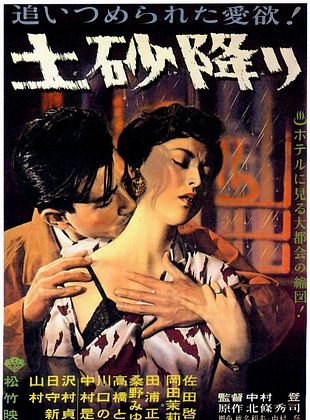
Matsuko flees to Kobe and survives as a cabaret dancer. Two years later, Sudo reappears as a fugitive from a corruption scandal, and Matsuko shelters him, clinging desperately to a love that has already failed them once.
Okada delivers a harrowing portrait of emotional endurance, while Sada delivers one of his most complex performances—as an ineffectual, indecisive man undone by social conformity. Enhanced by leading 20th-century composer Toru Takemitsu’s early score and the stark, black-and-white imagery, the film becomes a profound meditation on inherited guilt, doomed intimacy and the quiet violence of social respectability.
Jinbocho Theater
Please be sure to check with the theater before going.