
WHOLE
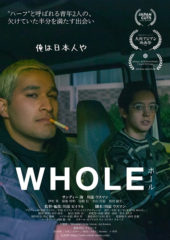
Coming to Grips with Biracialism in Diversity-Averse Japan
Venue(s): Uplink KichijojiFrom October 15, 2021 to October 28, 2021
Language: Japanese with English subtitles
Official website: www.whole-movie.com/
Theater website: joji.uplink.co.jp/movie/2021/10522
Trailer: https://www.youtube.com/watch?v=VEMIdYMXsMU
Tariff: General: ¥1,500, Youth (19 - 22): ¥1,100, Under 19: 1,000, Under 16: ¥800
Advance tickets: Visit theater site for details.
Title: WHOLE ホール (WHOLE)
Director: Bilal Kawazoe (川添ビイラル川添ビイラル)
Duration: 44 min
Japan’s increasing ethnic diversity has not yet led to its widespread cinematic representation, especially concerning biracial Japanese, with the noted exceptions of Megumi Nishikura and Lara Perez Takagi’s seminal 2013 documentary Hafu: The Mixed-Race Experience in Japan and Emmanuel Osei-Kuffour’s 2018 short Born With It. In 2019, Bilal Kawazoe’s mid-length Whole debuted at the Osaka Asian Film Festival and went on to screen at New York’s Japan Cuts and the Seoul International Film Festival. Those who missed it will now have a chance to take in this uniquely rewarding work at Uplink Kichijoji, which reinforces its ongoing commitment to reaching international audiences by screening the film with English subtitles.
While Naomi Osaki’s victory in the 2018 US Open tennis tournament prompted the most recent outcry around the “hafu phenomena,” most mixed-race children here are neither famous athletes nor popular models/actors/singers. Most, in fact, are like the two young protagonists of Kawazoe’s film, who are at different ends of the economic spectrum but both struggling mightily to find their proper place.
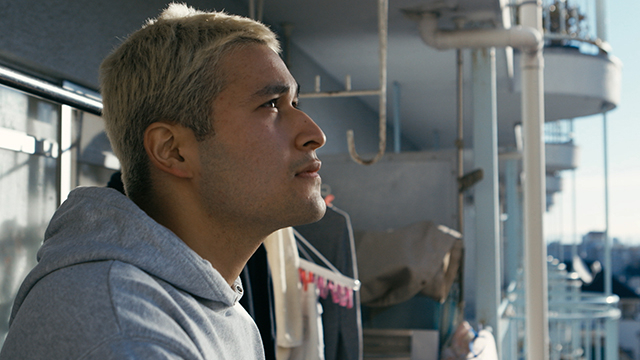
Whole opens with a deftly sketched example of unintentional racism, as Makoto (Usman Kawazoe, the director’s brother and cowriter) takes a cigarette break on a Kobe construction site and is grilled by a fellow worker, who can’t believe he is Japanese. Still, Makoto seems comfortable enough in his environment, and has a great relationship with his Japanese mother (Kou Ozaki), with whom he shares a small apartment.
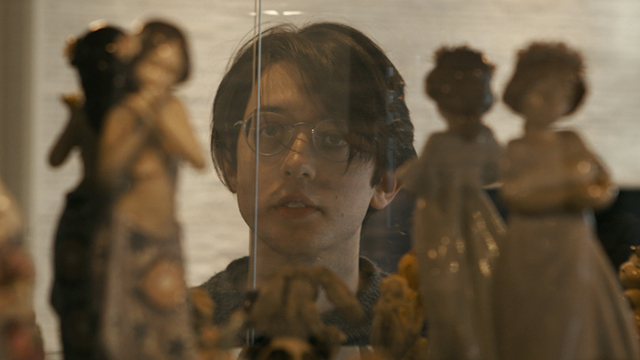
Meanwhile, Haruki (Sandy Kai) returns to Kobe after dropping out of a US university, and is reminded why he left in the first place: his mother is chilly, his father is on yet another business trip and his childhood friend doesn’t have much sympathy for his identity crisis. Although he professes to want to explore his Japanese roots more deeply, she’s quick to remind him just how “foreign” he is. Yet when she says she might stay in Kobe rather than studying overseas, he lashes out. “If you stay here,” he warns, “you’ll just get old and narrow minded.”
 One afternoon, both men are in the same ramen shop, and find themselves being pestered by a drunken customer. Makoto shrugs him off, but Haruki lets the experience rankle him. Despite their obvious differences, however, the two become friends and find ways to help each other complete the journey from hafu to whole.
Bilal Kawazoe has said that he was compelled to make Whole because of the “misrepresentation of mixed-race people in Japanese media,” as well as to “broaden the audience’s perspectives on what classifies as a ‘Japanese’ person.” A quick glance at statistics reminds us just how ethnically diverse the country really is, particularly when one considers the typical rejection of Japan as multicultural and multinational.
Statistics from the Ministry of Health, Labor and Welfare show an average of more than 30,000 international marriages each year in Japan for nearly 15 years, accounting for about one in every 30 unions. At least one in every 50 babies born here has one parent from a foreign country (that’s some 20,000 children each year).
The Kawazoe brothers are Japanese and Pakistani; just imagine how many stories there are to tell about the biracial experience in this “homogenous society.” May Whole inspire others out there to share them with us.
Uplink Kichijoji
Please be sure to check with the theater before going.