
YAMAGATA INTERNATIONAL DOCUMENTARY FILM FESTIVAL 2017

Bursting at the Seams with the Best in Nonfiction Film
Venue(s): Yamagata Central Public Hall, Yamagata Citizens' Hall, Forum Yamagata, Yamagata Museum of ArtOct. 5 (Thu) –12 (Thu), 2017; Visit the official site for details
Language: Multilanguages, all with Japanese and English subs
Official website: www.yidff.jp/2017/2017-e.html
Tariff: Visit the official site for details
Advance tickets: Visit the official site for details
Talk event: Visit the official site for details
Title: 山形国際ドキュメンタリー映画祭2017 (YAMAGATA International Documentary Film Festival 2017)
The Brigadoon of film festivals is back — but it’s really just a two-year wait, even if it feels like 100. In venues that sprawl across the small town of Yamagata, nestled in the autumnally clad northern Alps, the Yamagata International Documentary Film Festival (YIDFF) is Japan’s first and still only major festival devoted to nonfiction cinema, in all its many forms.
It’s easy to reach Yamagata by rail or bus (as fast as 3 hours) from Tokyo, and you’ll find that the films and fellow fans — not to mention the scenery, the nearby onsen and especially, the nightly gatherings at the Komian, a historic pickle factory-plus-bar — will make the long trip worth your while.
One of the world’s oldest doc fests, YIDFF is a don’t-miss event for aficionados and practitioners from around Asia, with many titles and filmmakers hailing from far, far afield. It screens an eye-popping number of works (almost all with English subs), hosts several hundred guests at Q&A sessions and special panels, attracts close to 25,000 visitors and yet, still feels intimate.
It also tends to feel serious, with many programs highlighting marginalized narratives and histories, alternative and independent visions, and the struggles of documentarians who film against all odds, braving taboos, determined to bring stories of injustice and suffering to light.
There are Japanese films in most of the festival sections, including the International Competition, New Asian Currents and Special Invitation films, and as always, we’re focusing on those at Tokyo Filmgoer. But you won’t want to miss all the other highlights, so check the superlative English website for the full schedule.
YIDFF's Opening film, as well as a special selection of minor masterpieces from the same director, is devoted to the celebrated pioneer of 60s experimental cinema, Toshio Matsumoto, a director, video artist and theoretician, as well as an influential teacher, who died earlier this year. As Harvard's Anthony Haden-Guest recently wrote, "Matsumoto rose to prominence as a daring stylist and fearless provocateur whose radically experimental films shattered social and aesthetic taboos with inspired precision and energy. Making prominent use of music and mandala-like formal structures, Matsumoto's deeply immersive and frequently psychedelic avant-garde films are trance inducing and quietly intense adventures in perception."
Legendary composer Toru Takemitsu wrote the scores for his early documentaries Ginrin and Song of the Stone. The former is included in the three-film package that opens the festival, In Memory of Matsumoto Toshio. It also includes his three-project film For My Crushed Right Eye.

Opening: In Memory of Matsumoto Toshio
Nishijin, 西陣 1961 / 35mm / 26 min
Ginrin, 銀輪 1955 / 35mm / 10 min
For My Crushed Right Eye, つぶれかかった右眼のために
1968 / 16mm for three projectors / 13 min
In Memory of Matsumoto Toshio also continues throughout the festival, with a broad cross-section of masterworks, predominantly short films. But there is also Matsumoto's feature debut, which is also his most famous work: Funeral Parade of Roses, which will be shown on 35mm film, a real rarity. A retelling of Oedipus Rex, Funeral Parade nearly defies description with its dizzying approach to narrative storytelling, and features a transsexual (Peter, in the role that put him on the map) and his friends, set in the competitive world of Japan's gay bars. It's said to have been a major influence on Stanley Kubrick's A Clockwork Orange.

Funeral Parade of Roses, 薔薇の葬列
1969 / 35mm / 107 min
The festival's Closing film is also Japanese, The Power of Expression: The Minamata Producer Speaks, by directors Minoru Inoue and Nozomi Kataoka, focusing on the essential work of producer Ryutaro Takagi, who was behind many documentaries, including the Minamata series by Noriaki Tsuchimoto in the 1960s.
YIDFF 2017 will feature 15 films in the main International Competition section, which is always programmed by a group of “real” people, rather than just festival programmers: academics, local small business owners, Yamagata volunteers, film critics and festival office staff. They selected the titles from 1,146 submissions from over 120 countries/regions, and two of them are from Japan.
The first, Sennan Asbestos Disaster, is by legendary doc-maker Kazuo Hara (The Emperor’s Naked Army Marches On). Hara spent eight years following the plaintiffs who sought state compensation for asbestos-related damages in the Sennan area of Osaka. Those familiar with his earlier work will not be surprised to learn that the film is grippingly intense, even at 215 minutes.

Sennan Asbestos Disaster, ニッポン国 vs 泉南石綿村
Japan / 2017 / 215 min
Director: Hara Kazuo, 原一男
The other Japanese title in Competition is Tremorings of Hope by Kazuki Agatsuma, who made his debut at YIDFF 2013 with The People Living in Hadenya. His new film is also set in Hadenya, an area of Miyagi Prefecture that saw enormous devastation from the 2011 Tohoku Earthquake, and he has continued to follow locals’ efforts to recover and revive heralded traditions like the lion dance.

Tremorings of Hope, 願いと揺らぎ
Japan / 2017 / 146 min
Director: Agatsuma Kazuki, 我妻和樹
Not Japanese but not to be missed in this section are two major festival successes from 2016, Ex Libris—The New York Public Library by Frederick Wiseman, and I Am Not Your Negro, by Raoul Peck.
There are three Japanese films in the New Asian Currents section, a lineup chosen out of 645 submissions from over 60 countries/regions. The Okinawa-set A Woman of the Butcher Shop by Chikako Yamashiro builds on an earlier short work, telling the story of a woman who runs a meat shop in a black market on the fringes of one of the island's many US military bases.

A Woman of the Butcher Shop, 肉屋の女
Japan / 2017 / 27 min
Director: Yamashiro Chikako, 山城知佳子
The Beginning of Creation: Abduction/A Child, also by Chikako Yamashiro, recreates a landmark performance by the late, great Butoh dancer Kazuo Ohno.

The Beginning of Creation: Abduction / A Child
創造の発端 ―アブダクション/子供―
Japan / 2015 / 18 min
Director: Yamashiro Chikako, 山城知佳子
On to the Next Step: Lives After 3.11 by Yoko Tashiro follows food-industry workers in northern Japan — farmers, fisherman, bakers — who are all anxious about a nuclear power plant under construction nearby.

On to the Next Step: Lives After 3.11, 風のたより
Japan / 2015 / 180 min, Director: Tashiro Yoko, 田代陽子
In the Perspectives Japan section, new visions of the country are portrayed, deploying a variety of formats and approaches. There are films on the Tohoku Earthquake, a Chinese immigrant campaigning for office in Japan, a tea factory and even the numbered days for 8mm film.

I Want to Run for Office, 選挙に出たい
CHINA / 2016 / 78 min
Director: Xing Fei

Tenryu-ku Okuryoke Osawa: Bessho Tea Factory
天竜区奥領家大沢 別所製茶工場
Japan / 2014 / 64 min
Director: Teiichi Hori
The Cinema with Us section continues to focus on work born from the triple disaster of 2011, now 6 years distant but still foremost in the minds of millions. The program poses questions about the role that documentary can play in the “recovery” process, and features work by foreign as well as Japanese filmmakers.
In the section called Yamagata and Film, the history of the prefecture’s relationship to cinema is explored. There are screenings of many films from the 1990s, including Mamoru Oshii’s first live-action feature, The Red Spectacles (1987), which is set around Kaminoyama’s Tokiwa Theater; and work by and discussions of acclaimed documentarian Makoto Sato (Living on the River Agano), whose relationship with Yamagata began with the first festival in 1989.
And there is everso much more. Below are others in the lineup:
Other Special Invitation Films

The Targeted Island: A Shield Against Storms, 標的の島 風かたか
Director: Mikami Chie / JAPAN / 2017 / Blu-ray / 119 min
© 2017 DOCUMENTARY JAPAN, TOFOO FILMS, Chie Mikami
International Competition
(Non-Japanese films)
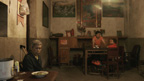
Another Year, また一年
China / 2016 / 181 min
Director: Zhu Shengze

Calabria, カラブリア
Switzerland / 2016 / 117 min
Director: Pierre-François Sauter

Communion, 聖餐式
Poland / 2016 / 72 min
Director: Anna Zamecka
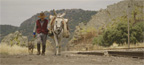
Donkeyote, ドンキー・ホーテ
Spain, Germany, UK / 2017 / 86 min
Director: Chico Pereira

Ex Libris—The New York Public Library
エクス・リブリス ― ニューヨーク公共図書館
USA / 2016 / 205 min
Director: Frederick Wiseman
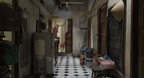
A House in Ninh Hoa, ニンホアの家
Germany / 2016 / 108 min
Director: Philip Widmann

I Am Not Your Negro, 私はあなたのニグロではない
USA, France, Belgium, Switzerland / 2016 / 93 min
Director: Raoul Peck
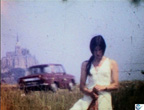
In the Intense Now, 激情の時
Brazil / 2017 / 127 min
Director: João Moreira Salles

Lone Existence, 孤独な存在
China / 2016 / 77 min
Director: Sha Qing

Machines, 機械
India, Germany, Finland / 2016 / 75 min
Director: Rahul Jain

A Memory in Khaki, カーキ色の記憶
Qatar / 2016 / 108 min
Director: Alfoz Tanjour
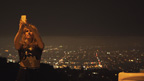
A Strange Love Affair with Ego, 自我との奇妙な恋
The Netherlands / 2015 / 91 min
Director: Ester Gould
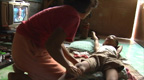
Wake (Subic), 航跡(スービック海軍基地)
USA, The Philippines / 2015 / 277 min
Director: John Gianvito
New Asian Currents
Perspectives Japan

Look Behind!, 後ろに振り向け!
JAPAN / 2017 / 8mm / 45 min
Director: Kenji Murakami

Almost Ghost, 幽霊 REEL-1~6 総集編
JAPAN / 2017 / 8mm / 80 min
Director: Kenji Onishi

The Road Home, かえりみち
JAPAN / 2016 / 48 min
Director: Miran Oura
BETWEEN YESTERDAY & TOMORROW Omnibus 2011/2016
JAPAN / 2017 / 43 min, Planning: Maeda Shinjiro
Director: Suzuki Hikaru, Oki Hiroyuki, Ikeda Yasunori, Takashi Toshiko
Theaters for YIDFF
The Brigadoon of film festivals is back — but it’s really just a two-year wait, even if it feels like 100. In venues that sprawl across the small town of Yamagata, nestled in the autumnally clad northern Alps, the Yamagata International Documentary Film Festival (YIDFF) is Japan’s first and still only major festival devoted to nonfiction cinema, in all its many forms.
It’s easy to reach Yamagata by rail or bus (as fast as 3 hours) from Tokyo, and you’ll find that the films and fellow fans — not to mention the scenery, the nearby onsen and especially, the nightly gatherings at the Komian, a historic pickle factory-plus-bar — will make the long trip worth your while.
One of the world’s oldest doc fests, YIDFF is a don’t-miss event for aficionados and practitioners from around Asia, with many titles and filmmakers hailing from far, far afield. It screens an eye-popping number of works (almost all with English subs), hosts several hundred guests at Q&A sessions and special panels, attracts close to 25,000 visitors and yet, still feels intimate.
It also tends to feel serious, with many programs highlighting marginalized narratives and histories, alternative and independent visions, and the struggles of documentarians who film against all odds, braving taboos, determined to bring stories of injustice and suffering to light.
There are Japanese films in most of the festival sections, including the International Competition, New Asian Currents and Special Invitation films, and as always, we’re focusing on those at Tokyo Filmgoer. But you won’t want to miss all the other highlights, so check the superlative English website for the full schedule.
YIDFF's Opening film, as well as a special selection of minor masterpieces from the same director, is devoted to the celebrated pioneer of 60s experimental cinema, Toshio Matsumoto, a director, video artist and theoretician, as well as an influential teacher, who died earlier this year. As Harvard's Anthony Haden-Guest recently wrote, "Matsumoto rose to prominence as a daring stylist and fearless provocateur whose radically experimental films shattered social and aesthetic taboos with inspired precision and energy. Making prominent use of music and mandala-like formal structures, Matsumoto's deeply immersive and frequently psychedelic avant-garde films are trance inducing and quietly intense adventures in perception."
Legendary composer Toru Takemitsu wrote the scores for his early documentaries Ginrin and Song of the Stone. The former is included in the three-film package that opens the festival, In Memory of Matsumoto Toshio. It also includes his three-project film For My Crushed Right Eye.
Opening: In Memory of Matsumoto Toshio
Nishijin, 西陣 1961 / 35mm / 26 min
Ginrin, 銀輪 1955 / 35mm / 10 min
For My Crushed Right Eye, つぶれかかった右眼のために
1968 / 16mm for three projectors / 13 min
In Memory of Matsumoto Toshio also continues throughout the festival, with a broad cross-section of masterworks, predominantly short films. But there is also Matsumoto's feature debut, which is also his most famous work: Funeral Parade of Roses, which will be shown on 35mm film, a real rarity. A retelling of Oedipus Rex, Funeral Parade nearly defies description with its dizzying approach to narrative storytelling, and features a transsexual (Peter, in the role that put him on the map) and his friends, set in the competitive world of Japan's gay bars. It's said to have been a major influence on Stanley Kubrick's A Clockwork Orange.
Funeral Parade of Roses, 薔薇の葬列
1969 / 35mm / 107 min
The festival's Closing film is also Japanese, The Power of Expression: The Minamata Producer Speaks, by directors Minoru Inoue and Nozomi Kataoka, focusing on the essential work of producer Ryutaro Takagi, who was behind many documentaries, including the Minamata series by Noriaki Tsuchimoto in the 1960s.
YIDFF 2017 will feature 15 films in the main International Competition section, which is always programmed by a group of “real” people, rather than just festival programmers: academics, local small business owners, Yamagata volunteers, film critics and festival office staff. They selected the titles from 1,146 submissions from over 120 countries/regions, and two of them are from Japan.
The first, Sennan Asbestos Disaster, is by legendary doc-maker Kazuo Hara (The Emperor’s Naked Army Marches On). Hara spent eight years following the plaintiffs who sought state compensation for asbestos-related damages in the Sennan area of Osaka. Those familiar with his earlier work will not be surprised to learn that the film is grippingly intense, even at 215 minutes.
Sennan Asbestos Disaster, ニッポン国 vs 泉南石綿村
Japan / 2017 / 215 min
Director: Hara Kazuo, 原一男
The other Japanese title in Competition is Tremorings of Hope by Kazuki Agatsuma, who made his debut at YIDFF 2013 with The People Living in Hadenya. His new film is also set in Hadenya, an area of Miyagi Prefecture that saw enormous devastation from the 2011 Tohoku Earthquake, and he has continued to follow locals’ efforts to recover and revive heralded traditions like the lion dance.
Tremorings of Hope, 願いと揺らぎ
Japan / 2017 / 146 min
Director: Agatsuma Kazuki, 我妻和樹
Not Japanese but not to be missed in this section are two major festival successes from 2016, Ex Libris—The New York Public Library by Frederick Wiseman, and I Am Not Your Negro, by Raoul Peck.
There are three Japanese films in the New Asian Currents section, a lineup chosen out of 645 submissions from over 60 countries/regions. The Okinawa-set A Woman of the Butcher Shop by Chikako Yamashiro builds on an earlier short work, telling the story of a woman who runs a meat shop in a black market on the fringes of one of the island's many US military bases.
A Woman of the Butcher Shop, 肉屋の女
Japan / 2017 / 27 min
Director: Yamashiro Chikako, 山城知佳子
The Beginning of Creation: Abduction/A Child, also by Chikako Yamashiro, recreates a landmark performance by the late, great Butoh dancer Kazuo Ohno.
The Beginning of Creation: Abduction / A Child
創造の発端 ―アブダクション/子供―
Japan / 2015 / 18 min
Director: Yamashiro Chikako, 山城知佳子
On to the Next Step: Lives After 3.11 by Yoko Tashiro follows food-industry workers in northern Japan — farmers, fisherman, bakers — who are all anxious about a nuclear power plant under construction nearby.
On to the Next Step: Lives After 3.11, 風のたより
Japan / 2015 / 180 min, Director: Tashiro Yoko, 田代陽子
In the Perspectives Japan section, new visions of the country are portrayed, deploying a variety of formats and approaches. There are films on the Tohoku Earthquake, a Chinese immigrant campaigning for office in Japan, a tea factory and even the numbered days for 8mm film.
I Want to Run for Office, 選挙に出たい
CHINA / 2016 / 78 min
Director: Xing Fei
Tenryu-ku Okuryoke Osawa: Bessho Tea Factory
天竜区奥領家大沢 別所製茶工場
Japan / 2014 / 64 min
Director: Teiichi Hori
The Cinema with Us section continues to focus on work born from the triple disaster of 2011, now 6 years distant but still foremost in the minds of millions. The program poses questions about the role that documentary can play in the “recovery” process, and features work by foreign as well as Japanese filmmakers.
In the section called Yamagata and Film, the history of the prefecture’s relationship to cinema is explored. There are screenings of many films from the 1990s, including Mamoru Oshii’s first live-action feature, The Red Spectacles (1987), which is set around Kaminoyama’s Tokiwa Theater; and work by and discussions of acclaimed documentarian Makoto Sato (Living on the River Agano), whose relationship with Yamagata began with the first festival in 1989.
And there is everso much more. Below are others in the lineup:
Other Special Invitation Films
The Targeted Island: A Shield Against Storms, 標的の島 風かたか
Director: Mikami Chie / JAPAN / 2017 / Blu-ray / 119 min
© 2017 DOCUMENTARY JAPAN, TOFOO FILMS, Chie Mikami
International Competition
(Non-Japanese films)
Another Year, また一年
China / 2016 / 181 min
Director: Zhu Shengze
Calabria, カラブリア
Switzerland / 2016 / 117 min
Director: Pierre-François Sauter
Communion, 聖餐式
Poland / 2016 / 72 min
Director: Anna Zamecka
Donkeyote, ドンキー・ホーテ
Spain, Germany, UK / 2017 / 86 min
Director: Chico Pereira
Ex Libris—The New York Public Library
エクス・リブリス ― ニューヨーク公共図書館
USA / 2016 / 205 min
Director: Frederick Wiseman
A House in Ninh Hoa, ニンホアの家
Germany / 2016 / 108 min
Director: Philip Widmann
I Am Not Your Negro, 私はあなたのニグロではない
USA, France, Belgium, Switzerland / 2016 / 93 min
Director: Raoul Peck
In the Intense Now, 激情の時
Brazil / 2017 / 127 min
Director: João Moreira Salles
Lone Existence, 孤独な存在
China / 2016 / 77 min
Director: Sha Qing
Machines, 機械
India, Germany, Finland / 2016 / 75 min
Director: Rahul Jain
A Memory in Khaki, カーキ色の記憶
Qatar / 2016 / 108 min
Director: Alfoz Tanjour
A Strange Love Affair with Ego, 自我との奇妙な恋
The Netherlands / 2015 / 91 min
Director: Ester Gould
Wake (Subic), 航跡(スービック海軍基地)
USA, The Philippines / 2015 / 277 min
Director: John Gianvito
New Asian Currents
Perspectives Japan
Look Behind!, 後ろに振り向け!
JAPAN / 2017 / 8mm / 45 min
Director: Kenji Murakami
Almost Ghost, 幽霊 REEL-1~6 総集編
JAPAN / 2017 / 8mm / 80 min
Director: Kenji Onishi
The Road Home, かえりみち
JAPAN / 2016 / 48 min
Director: Miran Oura
BETWEEN YESTERDAY & TOMORROW Omnibus 2011/2016
JAPAN / 2017 / 43 min, Planning: Maeda Shinjiro
Director: Suzuki Hikaru, Oki Hiroyuki, Ikeda Yasunori, Takashi Toshiko
Theaters for YIDFF
Please be sure to check with the theater before going.